


Parameter
- 530 Seiten
- 19 Lesestunden
Mehr zum Buch
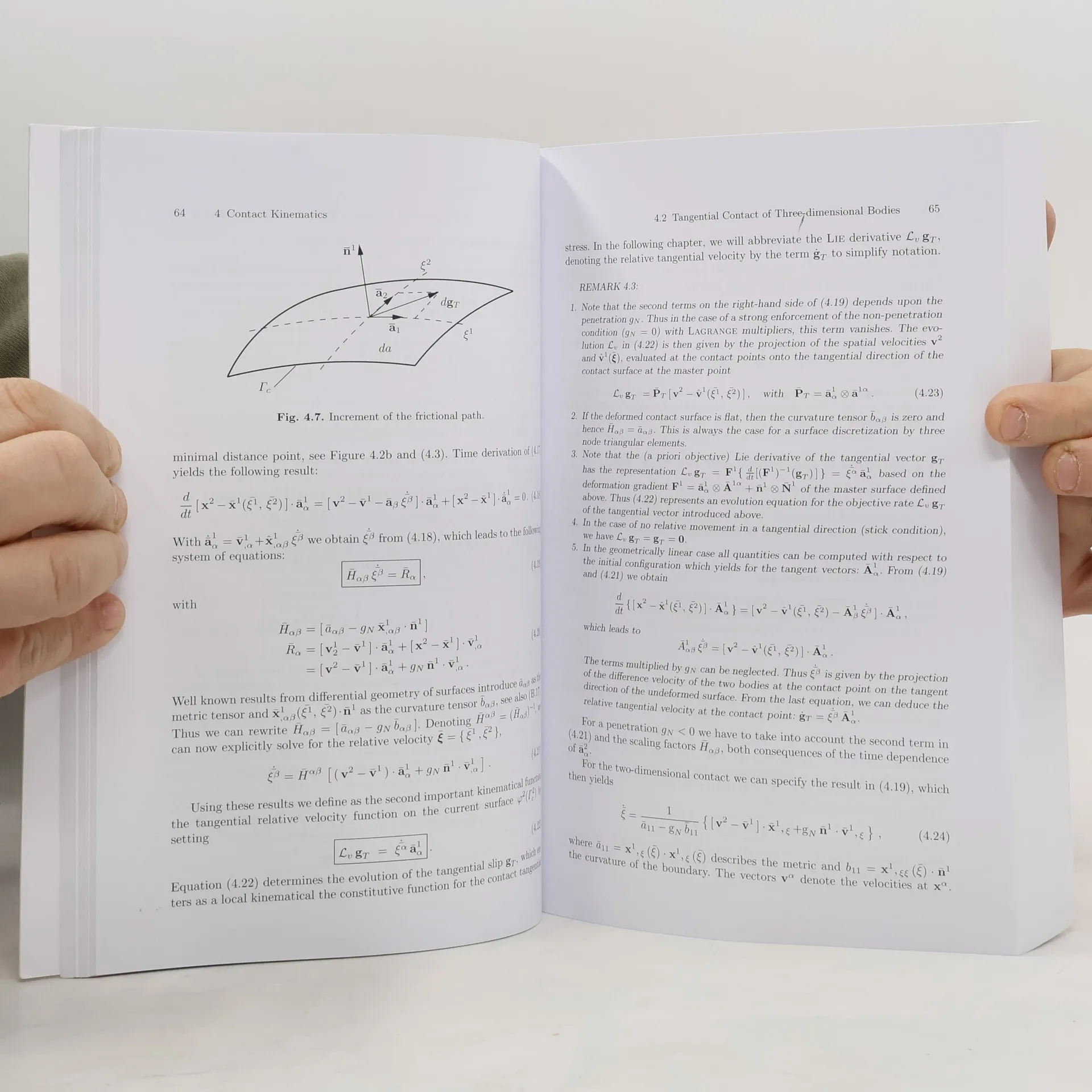
Contact mechanics is crucial in various engineering challenges, as it underpins everyday activities like walking and driving. Its historical roots trace back to ancient Egypt, where the movement of large stone blocks was a fundamental application. Over centuries, contributions from notable figures such as Leonardo da Vinci and Coulomb paved the way for advancements in the field. Traditionally, contact conditions in engineering analyses were simplified due to the absence of analytical solutions for real-world scenarios, leading to localized investigations of stress and strain fields derived from broader structural analyses. However, with the advent of powerful modern computers, numerical simulations can now directly incorporate contact constraints, resulting in nonlinear problems. This text explores the contemporary theory of nonlinear continuum mechanics and its relevance to contact issues, alongside modern simulation techniques utilizing the finite element method. It covers various discretization methods for both small and large deformation contact scenarios. Additionally, the development of robust algorithms is essential for effective contact simulations. Adaptive methods, which employ error-controlled finite element analysis and mesh adaptation, are also highlighted for their significance in achieving reliable numerical solutions for contact problems.
Buchkauf
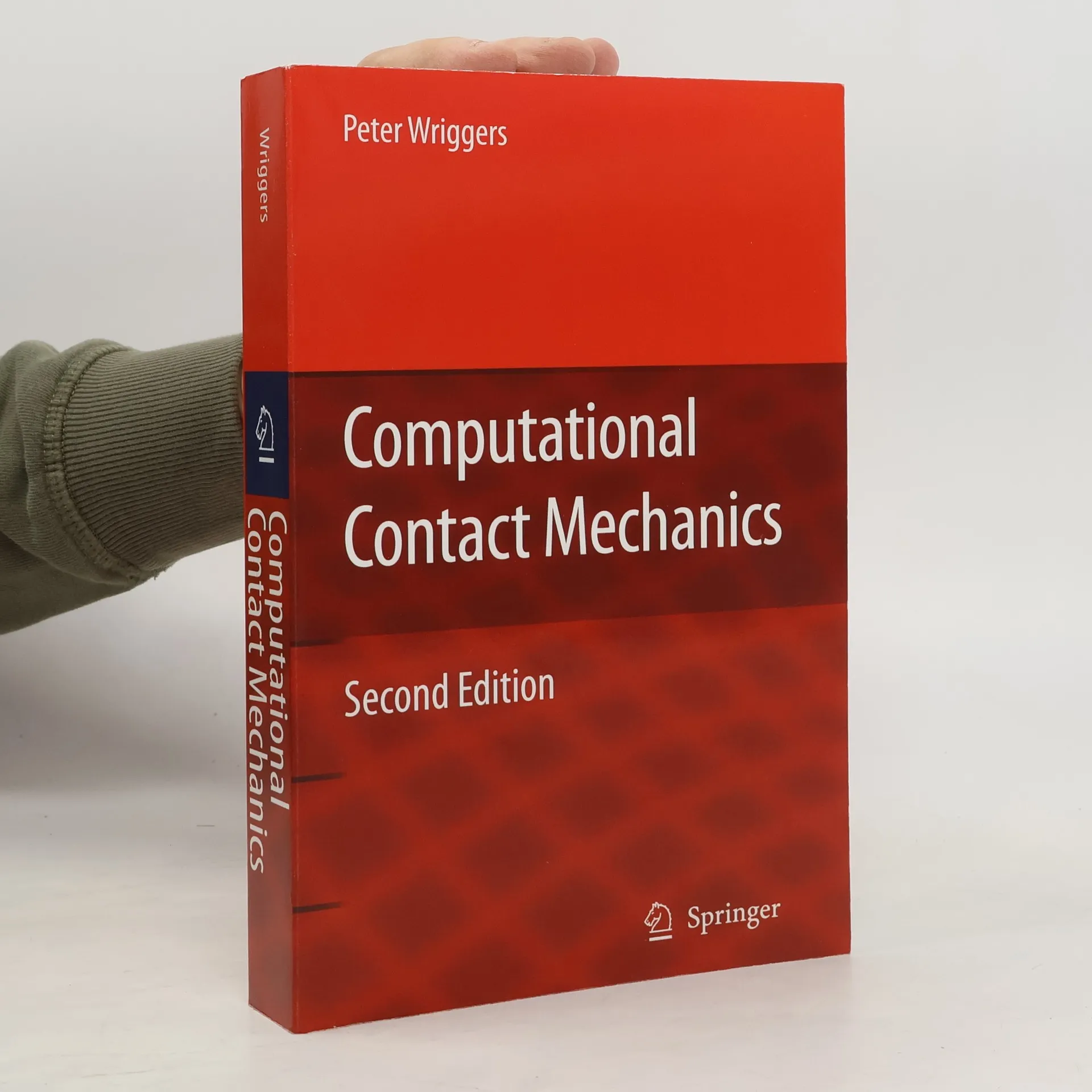
Computational Contact Mechanics, Peter Wriggers
- Sprache

- Erscheinungsdatum
- 2010
- Einband
- (Paperback)
Keiner hat bisher bewertet.
- Titel
- Computational Contact Mechanics
- Untertitel
- Second Edition
- Sprache
- Englisch
- Autor*innen
- Peter Wriggers
- Verlag
- Springer
- Erscheinungsdatum
- 2010
- Einband
- Paperback
- Seitenzahl
- 530
- ISBN10
- 3642069045
- ISBN13
- 9783642069048
- Reihe
- Kategorien
- Schlagwörter
- Wissenschaft, Technologie, Maschinenbau, Künstliche Intelligenz, Mechanik, Biomechanik
- Beschreibung
- Contact mechanics is crucial in various engineering challenges, as it underpins everyday activities like walking and driving. Its historical roots trace back to ancient Egypt, where the movement of large stone blocks was a fundamental application. Over centuries, contributions from notable figures such as Leonardo da Vinci and Coulomb paved the way for advancements in the field. Traditionally, contact conditions in engineering analyses were simplified due to the absence of analytical solutions for real-world scenarios, leading to localized investigations of stress and strain fields derived from broader structural analyses. However, with the advent of powerful modern computers, numerical simulations can now directly incorporate contact constraints, resulting in nonlinear problems. This text explores the contemporary theory of nonlinear continuum mechanics and its relevance to contact issues, alongside modern simulation techniques utilizing the finite element method. It covers various discretization methods for both small and large deformation contact scenarios. Additionally, the development of robust algorithms is essential for effective contact simulations. Adaptive methods, which employ error-controlled finite element analysis and mesh adaptation, are also highlighted for their significance in achieving reliable numerical solutions for contact problems.