


Mehr zum Buch
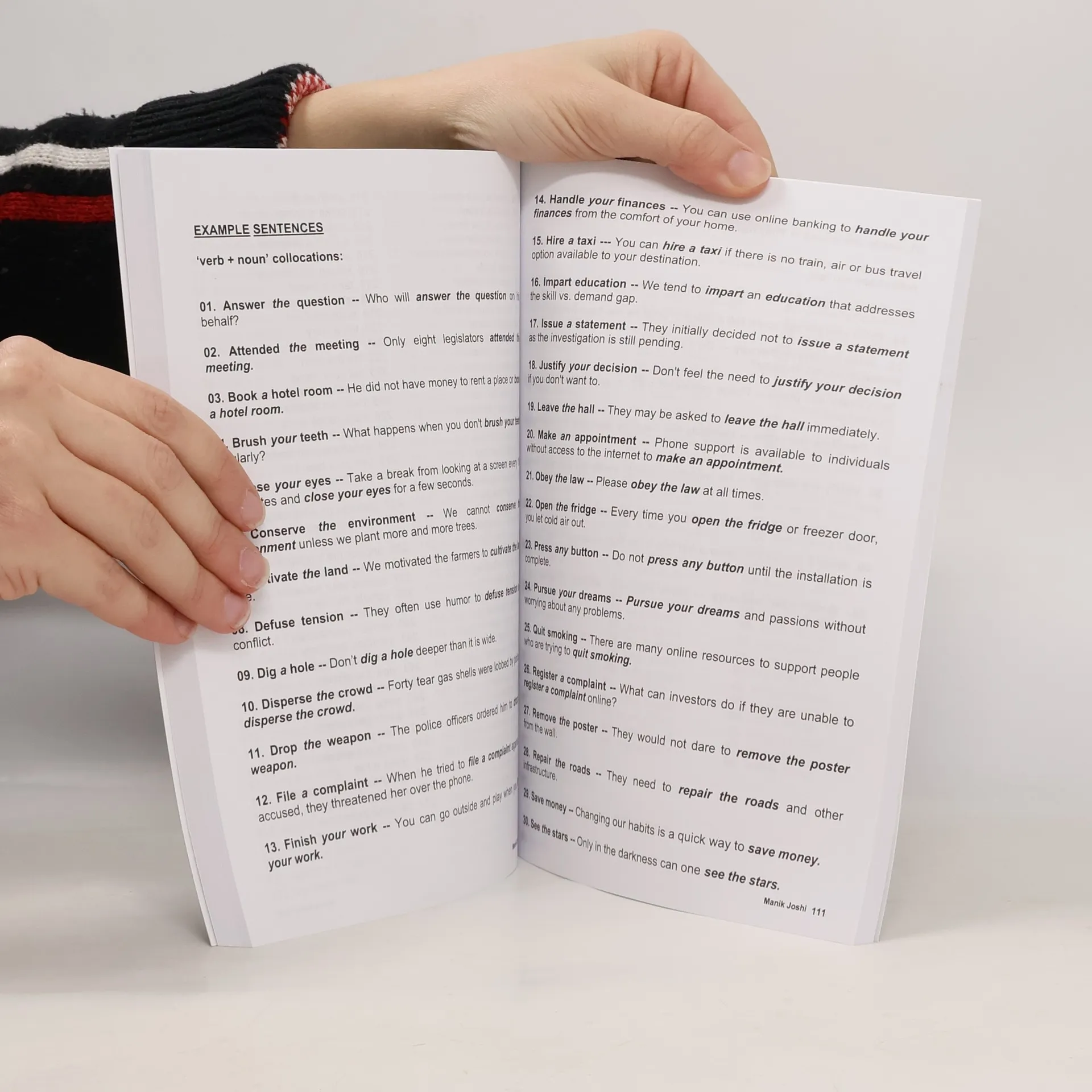
A collocation is a natural combination of words that native English speakers commonly use together. The term was first introduced by British linguist J.R. Firth. For instance, we say "light rainfall" instead of "skinny rainfall," and "take a printout" rather than "perform a printout." Understanding collocations helps in using language correctly, as some combinations sound right while others do not. Collocations can be categorized into several types: 1. **Adjective + Noun** (e.g., bright future) 2. **Adjective + Preposition** (e.g., skilled at) 3. **Adverb + Adjective** (e.g., keenly awaited) 4. **Adverb + Noun** (e.g., timely justice) 5. **Adverb + Preposition** (e.g., far from) 6. **Adverb + Verb** (e.g., legally entitled) 7. **Noun + Adjective** (e.g., disease-free) 8. **Noun + Noun** (e.g., awareness rally) 9. **Noun + Preposition** (e.g., confusion about) 10. **Noun + Verb** (e.g., lions roar) 11. **Verb + Adverb** (e.g., decide fast) 12. **Verb + Noun** (e.g., feed the bird) 13. **Verb + Preposition** (e.g., argue about) 14. **Other useful collocations** (e.g., cool-headed, environment-friendly) These combinations enhance fluency and comprehension in English, making speech and writing sound more natural.
Buchkauf
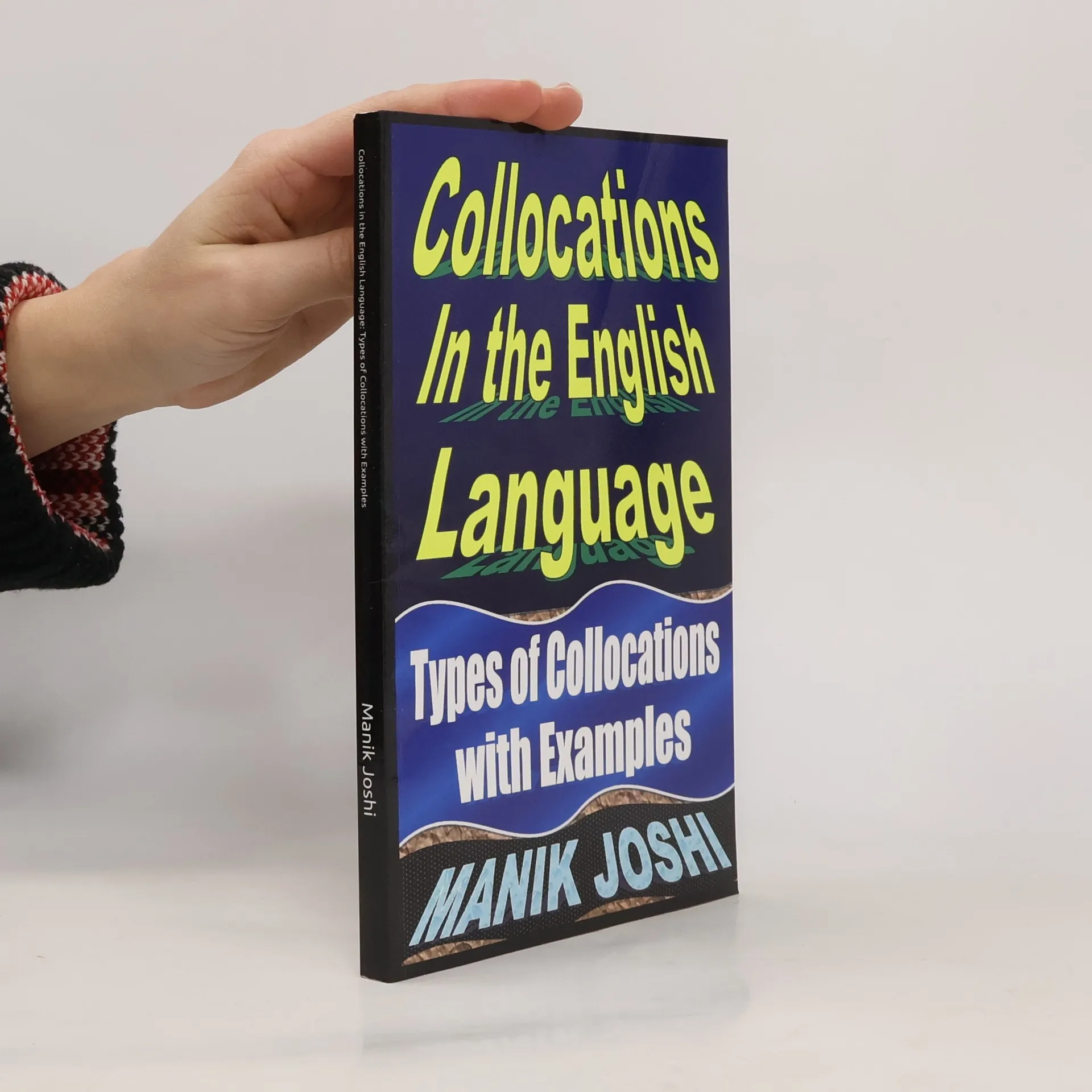
Collocations in the English Language, Manik Joshi
- Sprache

- Erscheinungsdatum
- 2021
- Einband
- (Paperback)
Keiner hat bisher bewertet.
- Titel
- Collocations in the English Language
- Untertitel
- Types of Collocations with Examples
- Sprache
- Englisch
- Autor*innen
- Manik Joshi
- Verlag
- Independently published
- Erscheinungsdatum
- 2021
- Einband
- Paperback
- Seitenzahl
- 175
- ISBN13
- 9798720412067
- Reihe
- Schlagwörter
- Sprachbücher & -lexika, Linguistik
- Beschreibung
- A collocation is a natural combination of words that native English speakers commonly use together. The term was first introduced by British linguist J.R. Firth. For instance, we say "light rainfall" instead of "skinny rainfall," and "take a printout" rather than "perform a printout." Understanding collocations helps in using language correctly, as some combinations sound right while others do not. Collocations can be categorized into several types: 1. **Adjective + Noun** (e.g., bright future) 2. **Adjective + Preposition** (e.g., skilled at) 3. **Adverb + Adjective** (e.g., keenly awaited) 4. **Adverb + Noun** (e.g., timely justice) 5. **Adverb + Preposition** (e.g., far from) 6. **Adverb + Verb** (e.g., legally entitled) 7. **Noun + Adjective** (e.g., disease-free) 8. **Noun + Noun** (e.g., awareness rally) 9. **Noun + Preposition** (e.g., confusion about) 10. **Noun + Verb** (e.g., lions roar) 11. **Verb + Adverb** (e.g., decide fast) 12. **Verb + Noun** (e.g., feed the bird) 13. **Verb + Preposition** (e.g., argue about) 14. **Other useful collocations** (e.g., cool-headed, environment-friendly) These combinations enhance fluency and comprehension in English, making speech and writing sound more natural.