

Mehr zum Buch
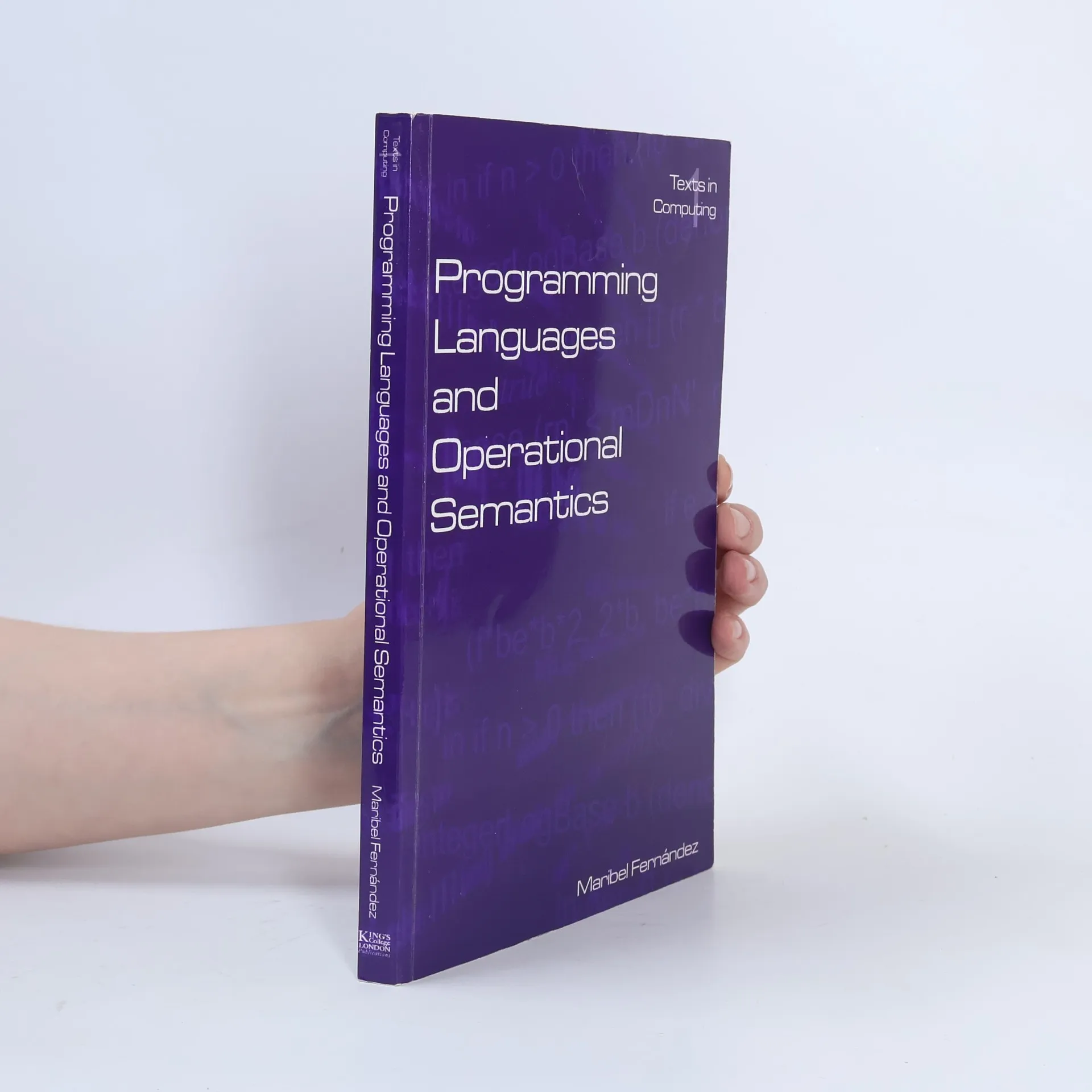
This book provides a concise introduction to the essential concepts in programming languages, using techniques from operational semantics. It is addressed to undergraduate students, as a complement to programming languages or operational semantics courses. There are three parts in the book, highlighting three major programming paradigms: - imperative languages: the main features of these languages are illustrated using Java, C, Pascal - functional languages: modern languages such as ML and Haskell are used to describe the functional style of programming - logic languages: the last part of the book gives an overview of logic programming using Prolog. After a general description of each family of languages, their semantics are studied using abstract machines and structural operational semantics. The book gives an in-depth analysis of the basic concepts in programming languages instead of a mere survey of languages, privileging the understanding of the basic techniques underlying the semantics of languages over simply describing their properties.
Buchkauf
Programming Languages and Operational Semantics, Maribel Fernandez
- Sprache

- Erscheinungsdatum
- 2004
- Einband
- (Paperback)
Hier könnte deine Bewertung stehen.
- Titel
- Programming Languages and Operational Semantics
- Untertitel
- An Introduction
- Sprache
- Englisch
- Autor*innen
- Maribel Fernandez
- Verlag
- College Publications
- Erscheinungsdatum
- 2004
- Einband
- Paperback
- Seitenzahl
- 156
- ISBN10
- 0954300637
- ISBN13
- 9780954300630
- Reihe
- Kategorien
- Schlagwörter
- Bewertung
- 3,25 von 5 Sternen
- Beschreibung
- This book provides a concise introduction to the essential concepts in programming languages, using techniques from operational semantics. It is addressed to undergraduate students, as a complement to programming languages or operational semantics courses. There are three parts in the book, highlighting three major programming paradigms: - imperative languages: the main features of these languages are illustrated using Java, C, Pascal - functional languages: modern languages such as ML and Haskell are used to describe the functional style of programming - logic languages: the last part of the book gives an overview of logic programming using Prolog. After a general description of each family of languages, their semantics are studied using abstract machines and structural operational semantics. The book gives an in-depth analysis of the basic concepts in programming languages instead of a mere survey of languages, privileging the understanding of the basic techniques underlying the semantics of languages over simply describing their properties.