


Mehr zum Buch
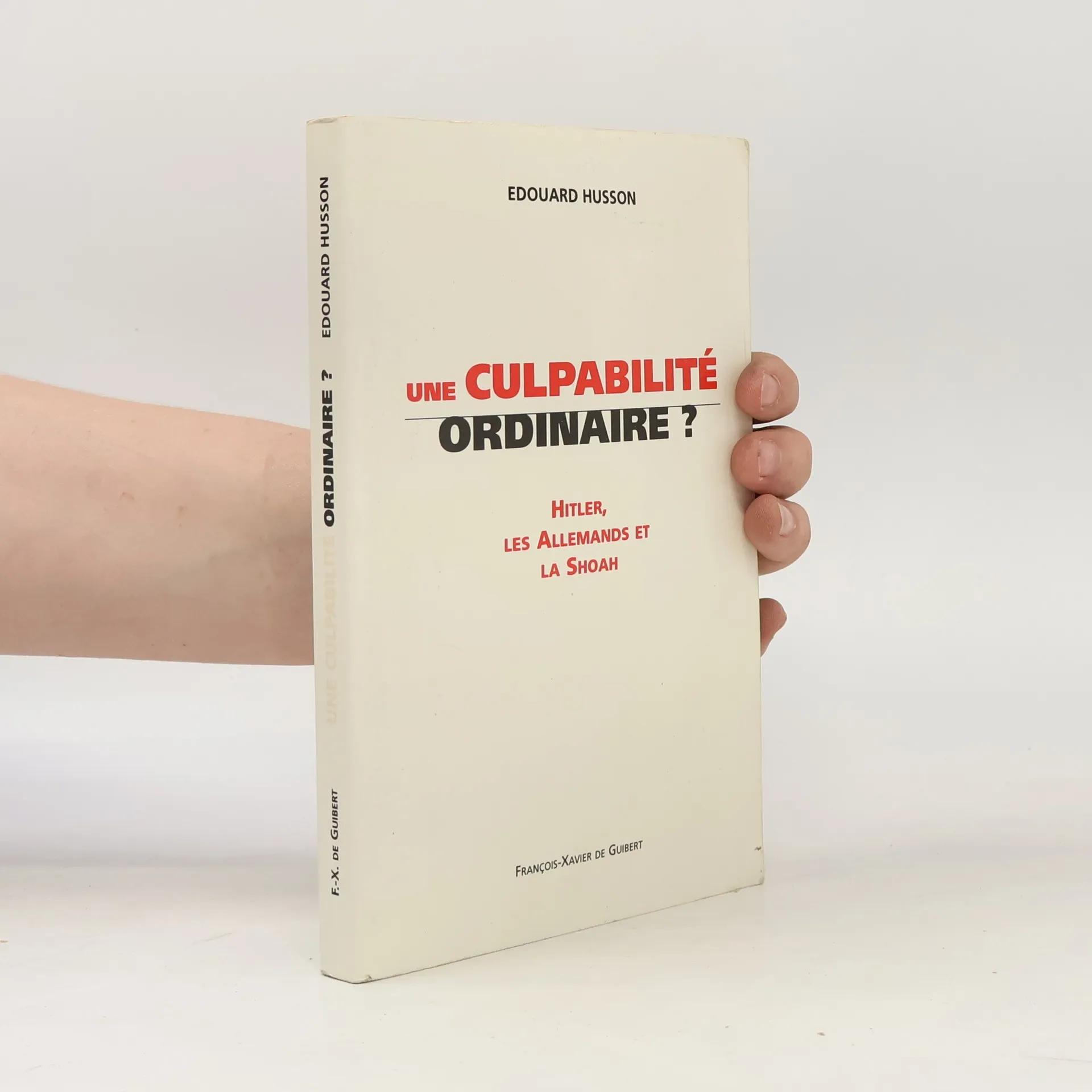
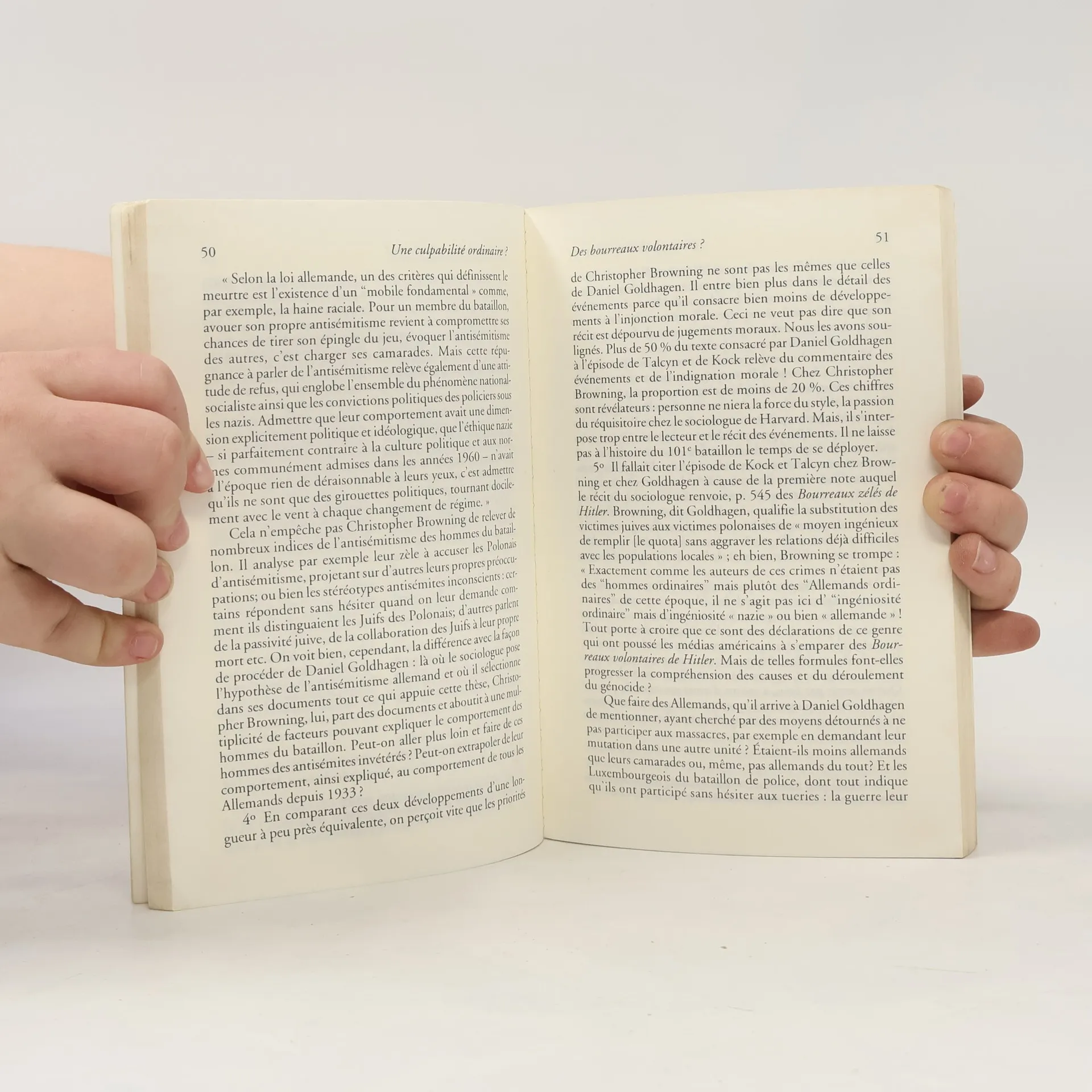
Criticizes Daniel Goldhagen for over-estimating German antisemitism as a motive for the Holocaust and for presenting an over-simplified picture of what drove "ordinary Germans" to become murderers. Pt. 1 (pp. 25-88) compares Goldhagen's analysis of how the members of Reserve Police Battalion 101 became killers, presented in his book "Hitler's Willing Executioners" (1996), to Christopher Browning's views on the same subject. Favors Browning's less emotional description of the gradual evolution and personal dynamics of these men, who were not initially disposed to murdering Jews. Pt. 2 (pp. 89-177) discusses the German reception of Goldhagen's work and the controversies it engendered there. Grants Goldhagen credit for reintroducing the essential question of Germany's collective guilt, and for countering efforts by German historians and politicians (such as Ernst Nolte and Chancellor Helmut Kohl) to normalize the Nazi period. Goldhagen has also made it difficult for historians to overlook the question of the legitimacy of the German Federal Republic after 1945. Deals also with the question whether the Holocaust is a subject for historiographical study, and prefers Goldhagen's views to those of Martin Broszat.
Buchkauf
Une culpabilité ordinaire?, Édouard Husson, François-Xavier de Guibert
- Sprache

- Erscheinungsdatum
- 1997
- Einband
- (Paperback),
- Buchzustand
- Gebraucht - Gut
- Preis
- 1,99 €inkl. MwSt.
Keiner hat bisher bewertet.
- Titel
- Une culpabilité ordinaire?
- Untertitel
- Hitler, les Allemands et la Shoah : les enjeux de la controverse Goldhagen
- Sprache
- Französisch
- Autor*innen
- Édouard Husson, François-Xavier de Guibert
- Erscheinungsdatum
- 1997
- Einband
- Paperback
- Seitenzahl
- 198
- ISBN10
- 2868394566
- ISBN13
- 9782868394569
- Reihe
- Schlagwörter
- Historisches Thema, Deutschland, Zweiter Weltkrieg, Europa, Geschichte Europas, Holocaust, Historiographie
- Beschreibung
- Criticizes Daniel Goldhagen for over-estimating German antisemitism as a motive for the Holocaust and for presenting an over-simplified picture of what drove "ordinary Germans" to become murderers. Pt. 1 (pp. 25-88) compares Goldhagen's analysis of how the members of Reserve Police Battalion 101 became killers, presented in his book "Hitler's Willing Executioners" (1996), to Christopher Browning's views on the same subject. Favors Browning's less emotional description of the gradual evolution and personal dynamics of these men, who were not initially disposed to murdering Jews. Pt. 2 (pp. 89-177) discusses the German reception of Goldhagen's work and the controversies it engendered there. Grants Goldhagen credit for reintroducing the essential question of Germany's collective guilt, and for countering efforts by German historians and politicians (such as Ernst Nolte and Chancellor Helmut Kohl) to normalize the Nazi period. Goldhagen has also made it difficult for historians to overlook the question of the legitimacy of the German Federal Republic after 1945. Deals also with the question whether the Holocaust is a subject for historiographical study, and prefers Goldhagen's views to those of Martin Broszat.