



Mehr zum Buch
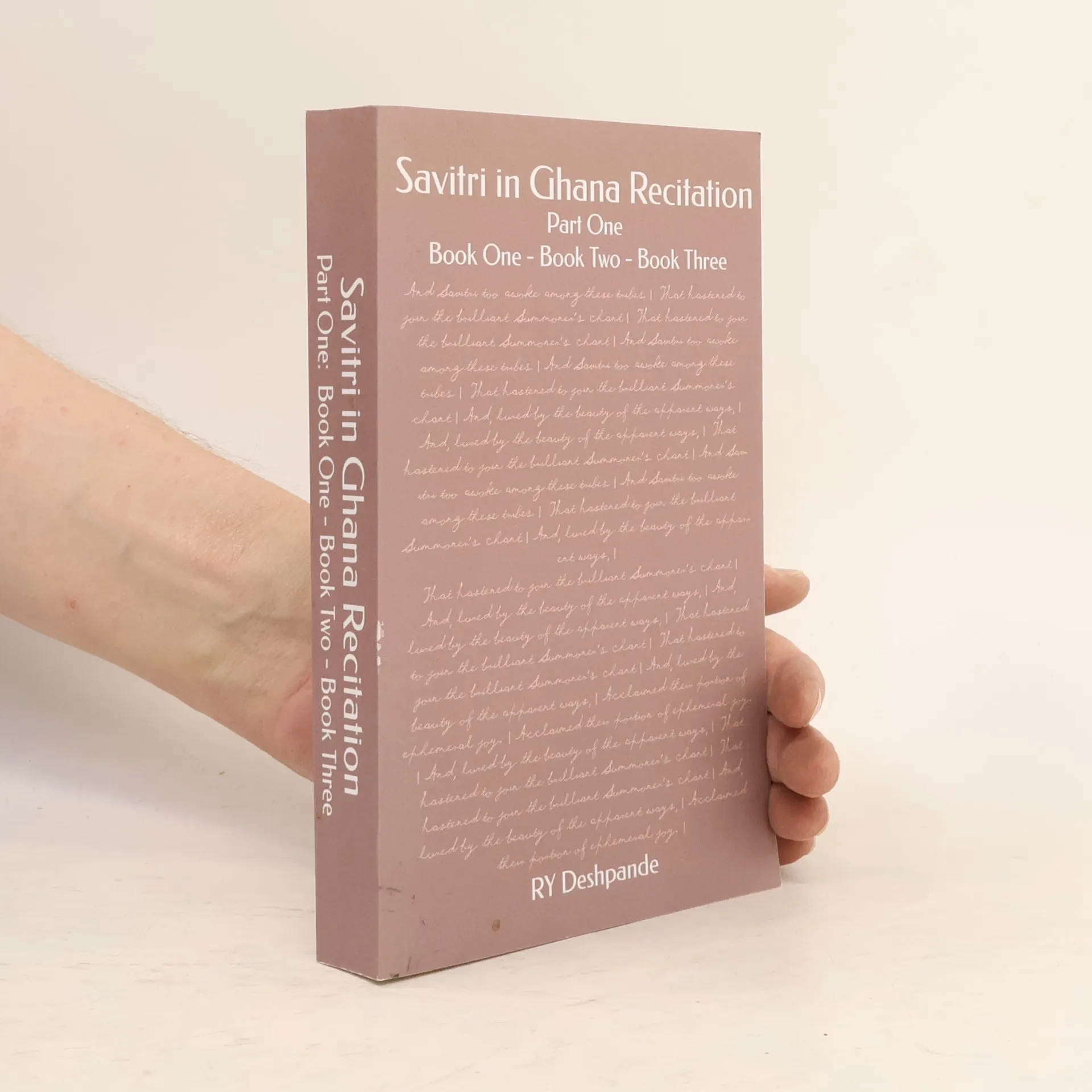
This work explores cyclic or repetitive reading of Savitri through traditional Vedic recitation methods, particularly Ghana Pāth, characterized by its complex sound patterns. The recitation involves grouping elements in sequences that create a rich auditory experience. We aim to adapt this chanting to English poetry, recognizing the intrinsic differences between English and Sanskrit, particularly in their sound structures. Savitri, with its end-stopped pentametic blank verse, serves as the foundation for our Ghana Recitation of selected passages. This epic already embodies a rich tapestry of sounds, and our approach seeks to introduce new dimensions of auditory experience through rhythmic movement. Our selection for Ghana recitation is limited to 60 passages from the first three books of Savitri, comprising about 1,500 lines, or roughly 12% of the total. This selection process is inherently subjective and may evolve with different interpretations or moods. The goal of Ghana recitation is to cultivate multi-tonal vibrations that resonate within us, enhancing our sensory experience. The sound is not merely a backdrop but a vital force that builds understanding and sentience. Ultimately, this exploration seeks to harmonize sense and sound, creating a profound auditory experience that enriches our engagement with the text.
Buchkauf
Savitri in Ghana Recitation, RY Deshpande
- Sprache

- Erscheinungsdatum
- 2019
- Einband
- (Paperback)
Keiner hat bisher bewertet.
- Titel
- Savitri in Ghana Recitation
- Untertitel
- Part One
- Sprache
- Englisch
- Autor*innen
- RY Deshpande
- Verlag
- Independently published
- Erscheinungsdatum
- 2019
- Einband
- Paperback
- Seitenzahl
- 462
- ISBN10
- 1090797680
- ISBN13
- 9781090797681
- Reihe
- Kategorien
- Schlagwörter
- Beschreibung
- This work explores cyclic or repetitive reading of Savitri through traditional Vedic recitation methods, particularly Ghana Pāth, characterized by its complex sound patterns. The recitation involves grouping elements in sequences that create a rich auditory experience. We aim to adapt this chanting to English poetry, recognizing the intrinsic differences between English and Sanskrit, particularly in their sound structures. Savitri, with its end-stopped pentametic blank verse, serves as the foundation for our Ghana Recitation of selected passages. This epic already embodies a rich tapestry of sounds, and our approach seeks to introduce new dimensions of auditory experience through rhythmic movement. Our selection for Ghana recitation is limited to 60 passages from the first three books of Savitri, comprising about 1,500 lines, or roughly 12% of the total. This selection process is inherently subjective and may evolve with different interpretations or moods. The goal of Ghana recitation is to cultivate multi-tonal vibrations that resonate within us, enhancing our sensory experience. The sound is not merely a backdrop but a vital force that builds understanding and sentience. Ultimately, this exploration seeks to harmonize sense and sound, creating a profound auditory experience that enriches our engagement with the text.