


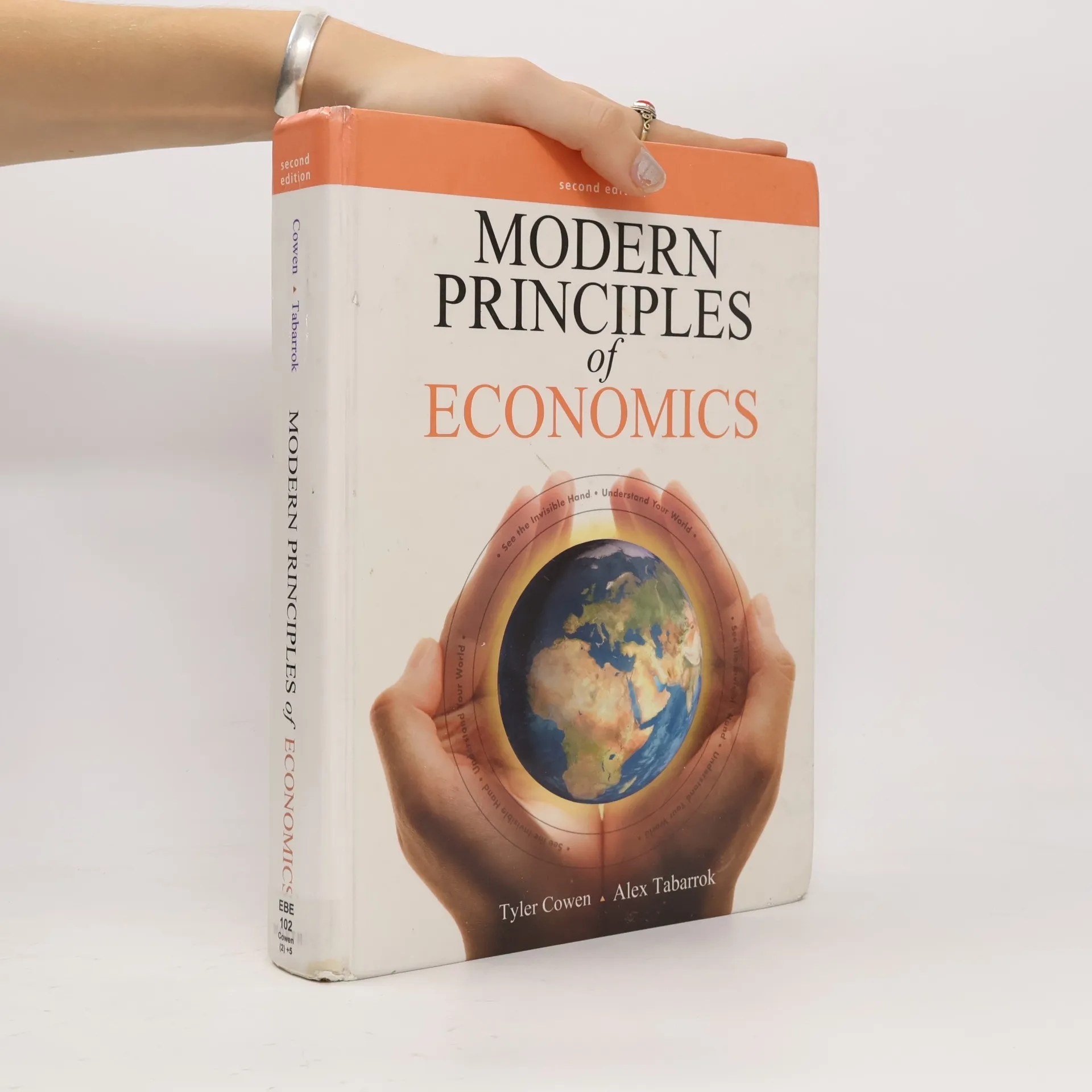
Engaging and provocative writing, as well as a knack for revealing the 'invisible hand' of economics at work has made Tyler Cowen and Alex Tabarrok’s text a singularly distinctive and effective text for principles modules. Modern Principles of Economics places an emphasis throughout on the power of incentives which underscores how economics helps us understand why we do what we do (in other words, the decisions we make in the face of incentives in the real world). The new edition retains its progressive approach to economic modelling and applications which allows for a more realistic interpretation of today’s world events. Mirroring the authors’ successful blog, the text eschews boxed features to focus on the writing behind compelling examples, key concepts, and applications.
Examines the trend of Americans away from the traditionally mobile, risk-accepting, and adaptable tendencies that defined them for much of recent history, and toward stagnation and comfort, and how this development has the potential to make future changes more disruptive. --Publisher's description.
The book features a detailed table of contents that outlines its structure and key topics. It serves as a guide for readers, showcasing the organization of chapters and themes explored within the text. This layout facilitates easy navigation and helps readers locate specific information or sections of interest. The contents reflect the book’s focus and provide insight into the depth of material covered.
The book features a detailed table of contents that outlines the structure and key topics covered within. Each section is organized to provide a clear roadmap for readers, facilitating easy navigation through the material. The contents suggest a comprehensive exploration of the subject matter, ensuring that readers can effectively find and engage with the information presented.
From the Modern. Simpler. These were our goals. We knew that to reflect modern macroeconomics we had to cover the Solow Model and the economics of ideas, Real Business Cycles, and New Keynesian economics. While most texts now cover the rudiments of economic growth, the importance of ideas is rarely even mentioned. Similarly, other texts do not offer a balanced treatment of Real Business Cycle theory and New Keynesian theory, instead favoring one theory and relegating the other to a few pages that are poorly integrated with the overall macro model. We also knew that our efforts to reflect modern macroeconomics would be wasted if we reached only a small percentage of the students. We had to make the material simpler, more compelling, and more intuitive. By boiling the Solow model down to its essence and by providing multiple paths through the material, we have made it accessible to all principles students. Our modern approach to business fluctuations is also simpler and yet more advanced at the same time. It is simpler because we model business fluctuations as fluctuations in the growth rate of output, rather than in the level of output. That creates a natural progression from growth theory to business fluctuations. It is simpler because we develop our balanced approach to Real Business Cycles and New Keynesian economics within a single, unified dynamic AD-AS model. And no other textbook offers the same depth of analysis of monetary and fiscal policy in response to both real and nominal shocks. That's why we call our text Modern Macroeconomics . We have taken recent advances in how economists think and describe macroeconomics and we have integrated them throughout the text. Growth theory is given full treatment and it is integrated with our dynamic macroeconomic model. Insights from Real Business Cycle theory and New Keynesian theory appear early in the text, not tacked on at the end as an afterthought. We are certain you will see that this text provides the best coverage of the new principles that macroeconomists use today.