Examines the trend of Americans away from the traditionally mobile, risk-accepting, and adaptable tendencies that defined them for much of recent history, and toward stagnation and comfort, and how this development has the potential to make future changes more disruptive. --Publisher's description.
Our goals were to create a modern and simpler approach to macroeconomics. We recognized the need to cover essential topics such as the Solow Model, the economics of ideas, Real Business Cycles, and New Keynesian economics. While many texts address economic growth, they often overlook the significance of ideas. Additionally, most do not provide a balanced view of Real Business Cycle and New Keynesian theories, often favoring one over the other. To reach a broader audience, we aimed to make the material more accessible, engaging, and intuitive. By distilling the Solow model to its core and offering multiple pathways through the content, we have made it suitable for all students. Our approach to business fluctuations is both simpler and more advanced, modeling fluctuations in the growth rate of output rather than the output level. This creates a seamless transition from growth theory to business fluctuations. We also unify Real Business Cycles and New Keynesian economics within a single dynamic AD-AS model. Furthermore, our text provides an in-depth analysis of monetary and fiscal policy responses to real and nominal shocks, unlike any other textbook. By integrating recent advances in macroeconomic thought throughout the text, we ensure comprehensive coverage of contemporary principles that macroeconomists utilize today.
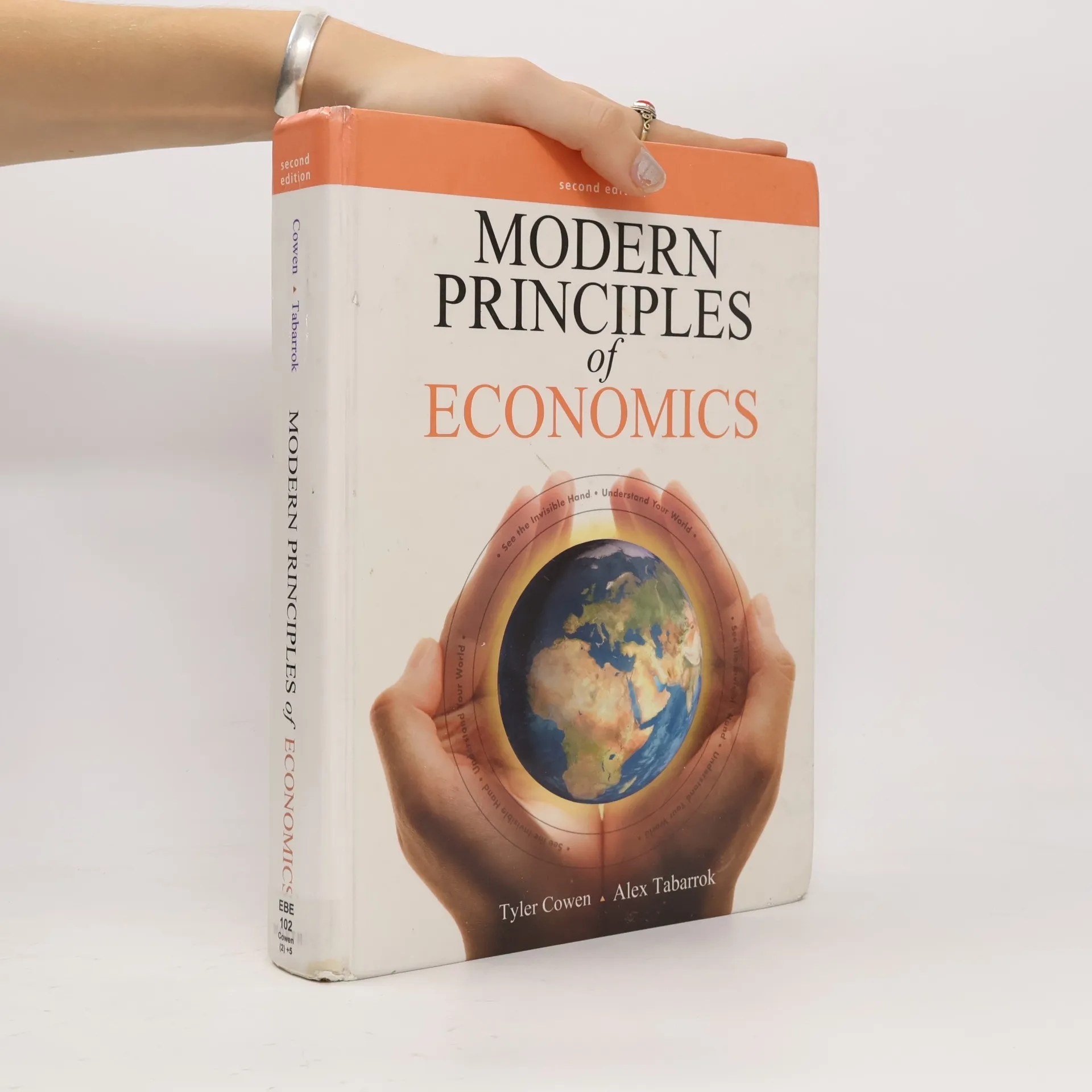
The authors emphasize a teaching philosophy centered on understanding the intricate connections within economics, encapsulated in the tagline, "See the Invisible Hand. Understand Your World." Nobel laureate Vernon Smith highlights the profound mystery at economics' core: how order emerges from individual choices. The authors aim to inspire students by illustrating how markets respond dynamically to changes in resources and preferences. For instance, a decrease in oil supply raises oil prices, prompting consumers to reduce usage and suppliers to seek alternatives. This price increase also incentivizes Brazilian sugar cane farmers to shift production from sugar to ethanol, consequently raising sugar prices and reducing candy demand. Through such analyses, students learn to recognize the invisible hand at work and comprehend their surroundings. The text also provides a straightforward proof of the invisible hand theorem, demonstrating how competitive markets, without central direction, allocate resources efficiently. To grasp their world, students must discern when self-interest aligns with social interest. The book delves into externalities, public goods, and ethical considerations surrounding market incomes and trade, framing economic theory within real-world challenges like declining ocean fisheries, climate change, and organ shortages for transplants.