Gratisversand in ganz Deutschland!
Bookbot

Oliver Kozlarek

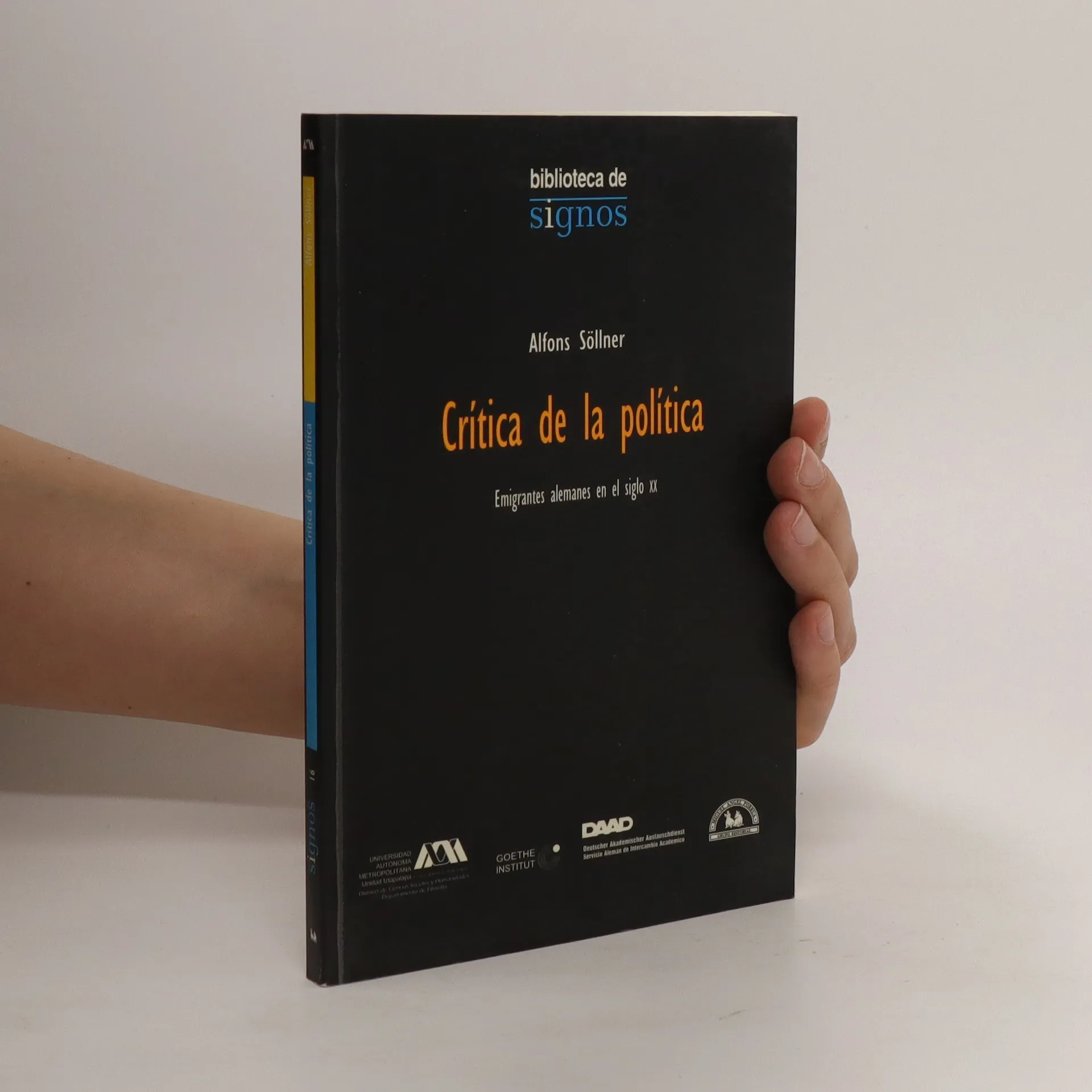
    Crítica de la política : emigrantes alemanes en el siglo XX
    Octavio Paz
    Postcolonial Reconstruction: A Sociological Reading of Octavio Paz
    The Critical Humanism of the Frankfurt School as Social Critique
    Universalien, Eurozentrismus, Logozentrismus
    • The book explores "Critical Humanism" through the lens of representatives from the Frankfurt School, presenting it as a political practice rather than a mere theoretical framework. It emphasizes the importance of critical social research in understanding and engaging with humanistic culture, advocating for an active, rather than passive, approach to humanism. The author argues that this orientation is vital for addressing contemporary social issues and fostering meaningful change.

      The Critical Humanism of the Frankfurt School as Social Critique
    • Exploring the sociological dimensions of Octavio Paz's work, this book connects his ideas to contemporary discussions on the post-colonial condition in Mexico. It emphasizes the distinct post-colonial experiences in Latin America compared to other regions. Additionally, it critiques Modernity through Paz's lens, revealing how his perspective redefines it as an interplay of global and local influences. The analysis points towards a new humanism, highlighting Paz's unique contributions to understanding Modernity from a Latin American viewpoint.

      Postcolonial Reconstruction: A Sociological Reading of Octavio Paz
    • Octavio Paz

      Humanism and Critique

      • 266 Seiten
      • 10 Lesestunden

      Octavio Paz is one of the most recognized Latin American writers. His essays offer a sophisticated critique of global modernity. Although his work has advanced many of the arguments that orient our contemporary debates in the social sciences and in philosophy, it has hardly ever been seriously taken into consideration in these disciplines. The volume suggests that this may have been a mistake. Its authors indicate ways in which Paz' essays can be read as substantial contributions to the contemporary debates in various fields. The aim of this book is to present to a non-Spanish speaking audience some of the discussions about Paz' offerings to the ongoing debates. It also wants to make a clear statement: a critique of our contemporary modernity must go hand in hand with a non-exclusive intercultural understanding of Humanism.

      Octavio Paz