
Gratis Versand in ganz Deutschland
Bookbot

Sinclair McKay

    Sinclair McKay spezialisiert sich auf das Ausgraben vergessener Erzählungen und weniger bekannter Facetten der britischen Geschichte, insbesondere während Kriegszeiten. Seine Werke erwecken vergangene Ereignisse und oft übersehene Figuren zum Leben, mit einem scharfen Blick für Details und das menschliche Element. McKay taucht tief in die Feinheiten von Geheimdienstoperationen und das tägliche Leben gewöhnlicher Menschen in außergewöhnlichen Umständen ein. Sein Ansatz offenbart tiefere Bedeutungen und die Echos der Vergangenheit, die in der Gegenwart widerhallen.

    100 People You Never Knew Were at Bletchley Park
    FIRE & THE DARKNESS
    Secret Life of Bletchley Park Spec
    Dresden
    BERLIN – 1918–1989. Die Stadt, die ein Jahrhundert prägte
    Die Nacht, als das Feuer kam
    • In der Endphase des Zweiten Weltkrieges, im Februar 1945, bombardierten die Alliierten Dresden: Circa 25.000 Menschen fanden den Tod, die Überlebenden waren zutiefst traumatisiert, das einst prächtige Elbflorenz lag in Schutt und Asche. In »Die Nacht, als das Feuer kam« begibt sich der britische Journalist und Autor Sinclair McKay auf eine ganz besondere Spurensuche. In den Archiven der Stadt entdeckte er tief verborgene persönliche Aufzeichnungen, die es ihm ermöglichen, die Geschehnisse dieser drei verhängnisvollen Tage und Nächte aus der Perspektive der Bewohner der Stadt zu erzählen: Schülern, Mitgliedern der Hitlerjugend und des Kreuzchors, Künstlern, Musikern, aber auch des Kriegsgefangenen Kurt Vonnegut und nicht zuletzt Victor Klemperer sowie Piloten und Besatzungsmitgliedern der britischen und amerikanischen Verbände. Noch nie zuvor wurde das Ausmaß dieses Luftangriffs für die Zivilbevölkerung der Stadt so vielstimmig, emotional und zutiefst menschlich geschildert wie in diesem Meisterwerk der narrativen Geschichtsschreibung – und das noch lange, nachdem die letzte Seite umgeblättert ist, im Gedächtnis bleiben wird. Ausstattung: 24-seitiger Bildteil s/w
      Die Nacht, als das Feuer kam
    • »Man kann das zwanzigste Jahrhundert nicht verstehen, ohne Berlin zu verstehen; und man kann Berlin nicht verstehen, ohne die Erfahrungen der Menschen dort zu verstehen.« Sinclair McKay, Berlin Kaum eine andere Stadt stand im zwanzigsten Jahrhundert so sehr im Zentrum des Weltgeschehens wie Berlin: Ihr Aufstieg zur kosmopolitischen Metropole während der Weimarer Republik, der wirtschaftliche Absturz, die Machtübernahme der Nationalsozialisten, der Zweite Weltkrieg, ihre Teilung, die Wende und der Mauerfall. Zwischen Kaufhäusern der Moderne, UFA-Studios, Uranium-Clubs und Rosinenbombern erzählt Sinclair McKay die Geschichte der Stadt durch die Augen derer, die in ihr lebten: Vom idealistischen Wissenschaftler Albert Einstein bis zum Nazi-Architekten Albert Speer, von der Revolutionärin Rosa Luxemburg bis zum ersten deutschen Nachkriegsstar Hildegard Knef – von einfachen Hausfrauen, Büroangestellten, Zwangsarbeitern in einer Marmeladenfabrik oder übermütigen Jugendlichen, die das Dauerwellenverbot der Nationalsozialisten, umgingen. Generationen von Berlinern gibt Sinclair McKay eine Stimme und zeichnet dabei ein fesselndes, lebendiges und mit neuen Details gespicktes Portrait dieser Stadt und ihrer Bewohner, die von den Ereignissen der Geschichte immer wieder durchgerüttelt wurden – ihren Überlebenswillen und ihren Sinn für Humor jedoch nie verloren.

      BERLIN – 1918–1989. Die Stadt, die ein Jahrhundert prägte
    • Dresden

      • 400 Seiten
      • 14 Lesestunden
      4,3(45)Abgeben

      In February 1945, the Allies devastated Dresden, known as the 'Florence of the Elbe,' with explosive bombs dropping every seven and a half seconds, resulting in an estimated 25,000 deaths. This raises the question: was Dresden a legitimate military target, or was the bombing an act of senseless mass murder in a war that was already won? The narrative unfolds with a detailed account of the attack, from the first flares to flames soaring nearly a mile high, creating a searing wind that scorched lungs. Sinclair McKay brings this history to life, weaving in poignant human stories, including a Jewish woman who believed the bombs were divine retribution, novelist Kurt Vonnegut likening the destruction to the moon's surface, and 15-year-old Winfried Bielss, who wished to return home to his stamp collection, unaware of the impending tragedy. Through meticulous research and previously unseen sources, McKay shares untold civilian stories, capturing the essence of their lives amid the chaos. While Dresden symbolizes the brutalities of war, time allows for a clearer understanding of the ordinary lives affected. McKay writes with warmth and insight about morality in warfare, survival instincts, mass destruction, and the complexities of memory, showcasing his mastery as a historian.

      Dresden
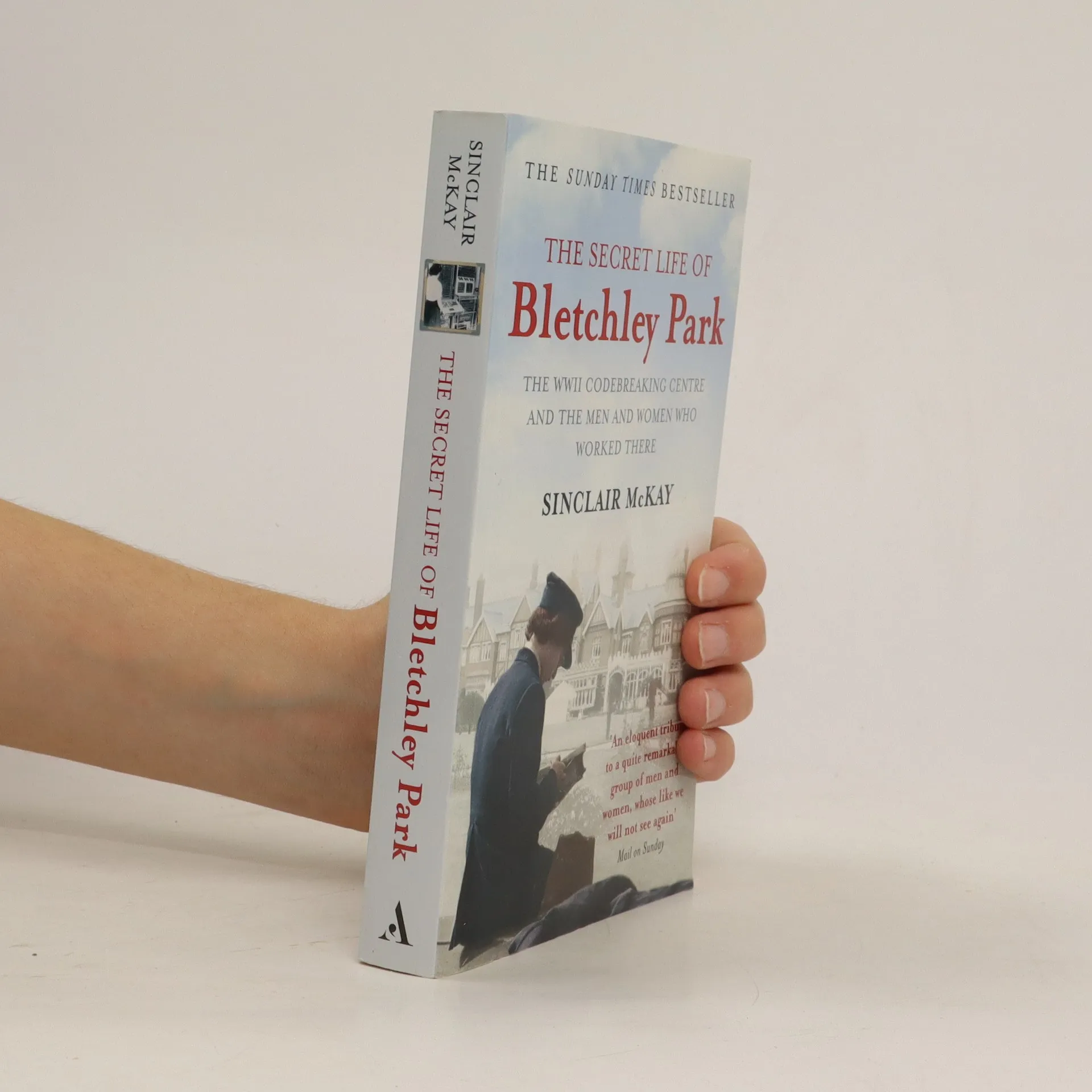
    • Bletchley Park was where one of the war's most famous - and crucial - achievements was made: the cracking of Germany's "Enigma" code in which its most important military communications were couched. This country house in the Buckinghamshire countryside was home to Britain's most brilliant mathematical brains, like Alan Turing, and the scene of immense advances in technology - indeed, the birth of modern computing. The military codes deciphered there were instrumental in turning both the Battle of the Atlantic and the war in North Africa. But, though plenty has been written about the boffins, and the codebreaking, fictional and non-fiction - from Robert Harris and Ian McEwan to Andrew Hodges' biography of Turing - what of the thousands of men and women who lived and worked there during the war? What was life like for them - an odd, secret territory between the civilian and the military? Sinclair McKay's book is the first history for the general reader of life at Bletchley Park, and an amazing compendium of memories from people now in their eighties - of skating on the frozen lake in the grounds (a depressed Angus Wilson, the novelist, once threw himself in) - of a youthful Roy Jenkins, useless at codebreaking, of the high jinks at nearby accommodation hostels - and of the implacable secrecy that meant girlfriend and boyfriend working in adjacent huts knew nothing about each other's work.

      Secret Life of Bletchley Park Spec
    • The Bombing of Dresden, 1945. A gripping work of narrative nonfiction recounting the history of the Dresden Bombing, one of the most devastating attacks of World War II. What happened that night in Dresden was calculated annihilation in a war that was almost over. Sinclair McKay's brilliant work takes a complex, human, view of this terrible night and its aftermath in a gripping book that will be remembered long after the last page is turned.

      FIRE & THE DARKNESS
    • A hundred short biographies of people who worked at the secret wartime codebreaking base of Bletchley Park, and went on in their postwar lives to all manner of remarkable achievements, from government office to composing the score for Dracula films, by the author of the bestselling The Secret Life of Bletchley Park.

      100 People You Never Knew Were at Bletchley Park
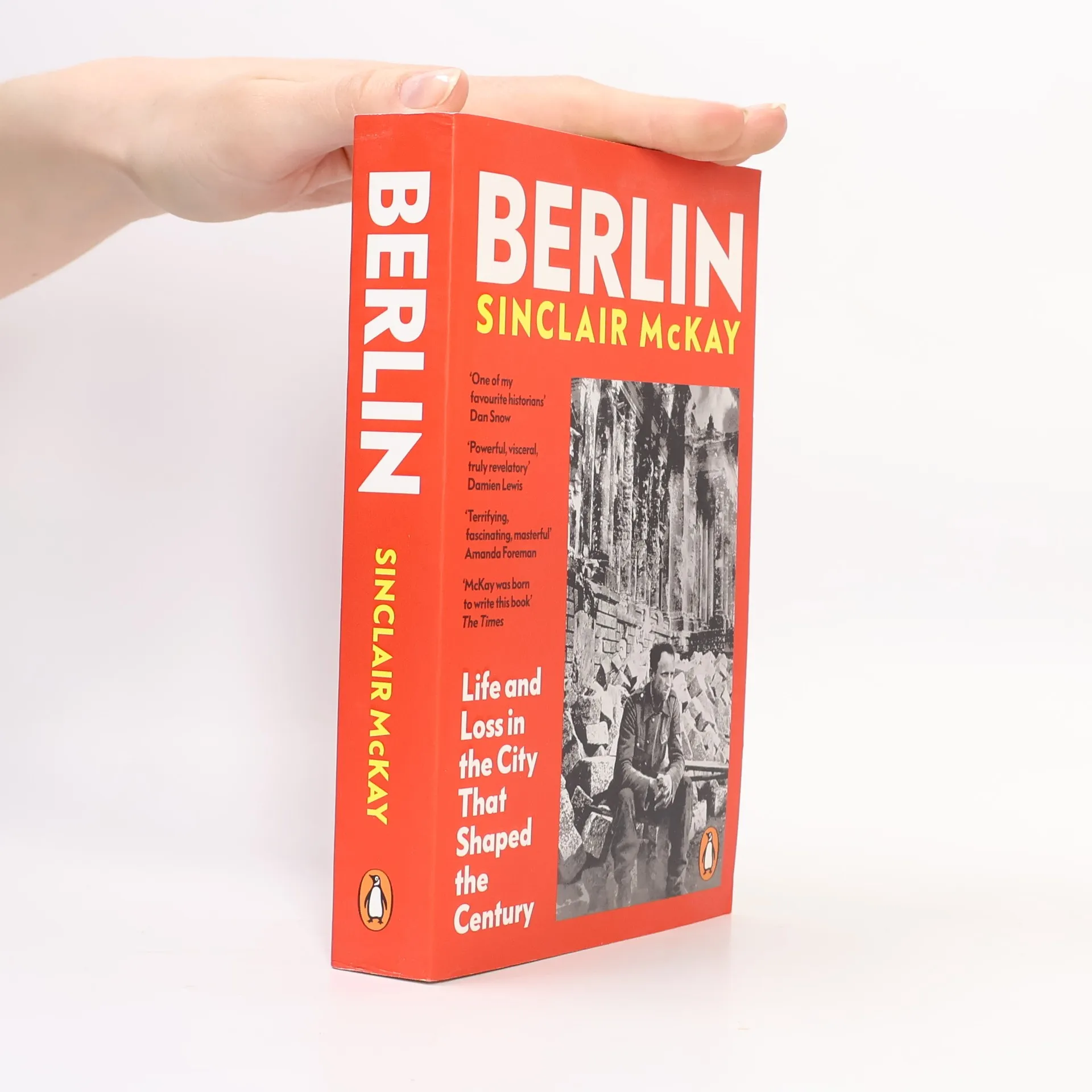
    • An almighty storm hit Berlin in the last days of April 1945. Enveloped by the unstoppable force of East and West, explosive shells pounded buildings while the inhabitants of a once glorious city sheltered in dark cellars - just like their Fuhrer in his bunker. The Battle of Berlin was a key moment in history; marking the end of a deathly regime, the defeated city was ripped in two by the competing superpowers of the Cold War. In Berlin, bestselling historian Sinclair McKay draws on never-before-seen first-person accounts to paint a picture of a city ravaged by ideology, war and grief. Yet to fully grasp the fall of Berlin, it is crucial to also explore in detail the years beforehand and to trace the city being rebuilt, as two cities, in the aftermath. From the passionate and austere Communists of 1919 to the sleek and serious industrialists of 1949, and from the glitter of innovation from artists such as George Grosz to the desperate border crossings for three decades from 1961, this is a story of a city that shaped an entire century, as seen through the eyes not of its rulers, but of those who walked its streets.

      Berlin
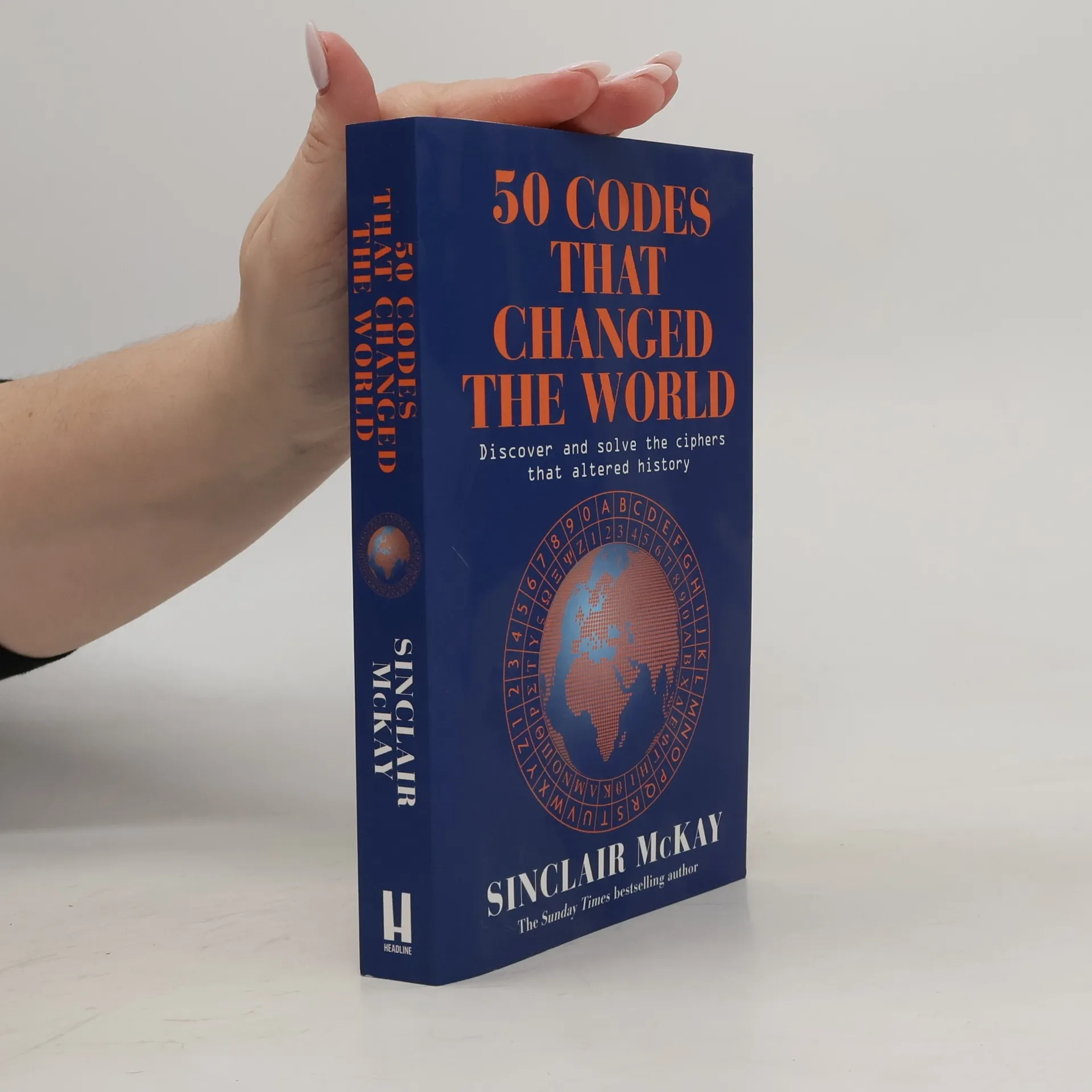
    • Uncrackable codes and secret cyphers that helped win wars, spark revolutions and change the faces of nations, rediscovered and explored in the newest book by the bestselling author and historian, Sinclair McKay.

      50 Codes That Changed the World
    • From the bestselling author of The Secret Life of Bletchley Park and Bletchley Park Brainteasers comes an exciting new book that journeys around the top secret and hidden WWII bases and battlegrounds in the UK, and tells the story of the brave men and women who fought and trained in them.

      Secret Britain
    • A fascinating exploration of the uncrackable codes and secret cyphers that helped win wars, spark revolutions and change the faces of nations. There have been secret codes since before the Old Testament, and there were secret codes in the Old Testament, too. Almost as soon as writing was invented, so too were the devious means to hide messages and keep them under the wraps of secrecy. In The Hidden History of Code Breaking, Sinclair McKay explores these uncrackable codes, secret cyphers and hidden messages from across time to tell a new history of a secret world. From the temples of Ancient Greece to the court of Elizabeth I; from antique manuscripts whose codes might hold prophecies of doom to the modern realm of quantum mechanics, we will see how a few concealed words could help to win wars, spark revolutions and even change the faces of great nations. Here is the complete guide to the hidden world of codebreaking, with opportunities for you to see if you could have cracked some of the trickiest puzzles and lip-chewing codes ever created

      The Hidden History of Code-Breaking