

Das Buch ist derzeit nicht auf Lager
Mehr zum Buch
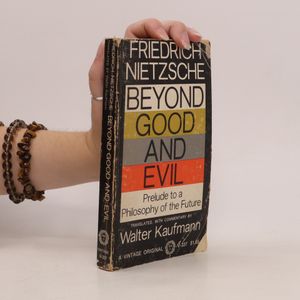
In 1886, at the height of his powers, Nietzsche published "Beyond Good and Evil." Here he examines much of the best of human thought--dogmatic philosophy, Judeo-Christian morality, science and democracy - and finds it lacking. Rejecting "slave-morality" he presents his prescient vision of the future of philosophy with poetry and passion.


Publikation
- 2024

- 2024
- 2023
- 2023
- 2023
- 2023
- 2023
- 2023
- 2023
- 2023
- 2023
- 2023

- 2022
- 2022
- 2022
- 2022
- 2022
- 2022
- 2022
- 2021
- 2021
- 2021
- 2021
- 2021
- 2021
- 2021
- 2021

- 2020
- 2020
- 2020
- 2020
- 2020
- 2020
- 2020
- 2020
- 2020
- 2020
- 2020
- 2020
- 2020
- 2020
- 2020
- 2020
- 2020
- 2020
- 2020

- 2019
- 2019
- 2019
- 2019
- 2019


- 2018

- 2018
- 2018
- 2018
- 2018
- 2018
- 2018
- 2018
- 2018
- 2018
- 2017
- 2017
- 2017
- 2017
- 2016

- 2013
- 2012
- 2010
- 2009
- 2009

- 2008
- 2008
- 2008
- 2008
- 2007
- 2007
- 2006
- 2005
- 2005
- 2004
- 2004







Buchkauf
Beyond Good and Evil, Friedrich Nietzsche
- Sprache

- Erscheinungsdatum
- 2018
Wir benachrichtigen dich per E-Mail.
Hier könnte deine Bewertung stehen.
- Titel
- Beyond Good and Evil
- Sprache
- Englisch
- Autor*innen
- Friedrich Nietzsche
- Verlag
- Benediction Classics
- Erscheinungsdatum
- 2018
- Seitenzahl
- 122
- ISBN10
- 1781399514
- ISBN13
- 9781781399514
- Reihe
- Schlagwörter
- Sachbücher, Sozialwissenschaften, Wahre Geschichten, Psychologische Thematik, Philosophisches Thema, Deutsche Literatur, Meinungsjournalismus, 19. Jahrhundert
- Erstveröffentlichung
- 1886
- Originaltitel
- Jenseits von Gut und Böse
- Bewertung
- 4,25 von 5 Sternen
- Beschreibung
- In 1886, at the height of his powers, Nietzsche published "Beyond Good and Evil." Here he examines much of the best of human thought--dogmatic philosophy, Judeo-Christian morality, science and democracy - and finds it lacking. Rejecting "slave-morality" he presents his prescient vision of the future of philosophy with poetry and passion.