




Parameter
- 242 Seiten
- 9 Lesestunden
Mehr zum Buch
The General Theory of Employment, Interest and Money of 1936 is the last and most important book by the English economist John Maynard Keynes. It created a profound shift in economic thought, giving macroeconomics a central place in economic theory and contributing much of its terminology - the "Keynesian Revolution". It had equally powerful consequences in economic policy, being interpreted as providing theoretical support for government spending in general, and for budgetary deficits, monetary intervention and counter-cyclical policies in particular. It is pervaded with an air of mistrust for the rationality of free-market decision making.Keynes denied that an economy would automatically adapt to provide full employment even in equilibrium, and believed that the volatile and ungovernable psychology of markets would lead to periodic booms and crises. The General Theory is a sustained attack on the 'classical' orthodoxy of its time enlivened by frequent sallies of elegant wit (but weighed down by clumsiness and confusion in its technical passages). It introduced the concepts of the consumption function, the principle of effective demand and liquidity preference, and gave new prominence to the multiplier and the marginal efficiency of capital.






Buchkauf
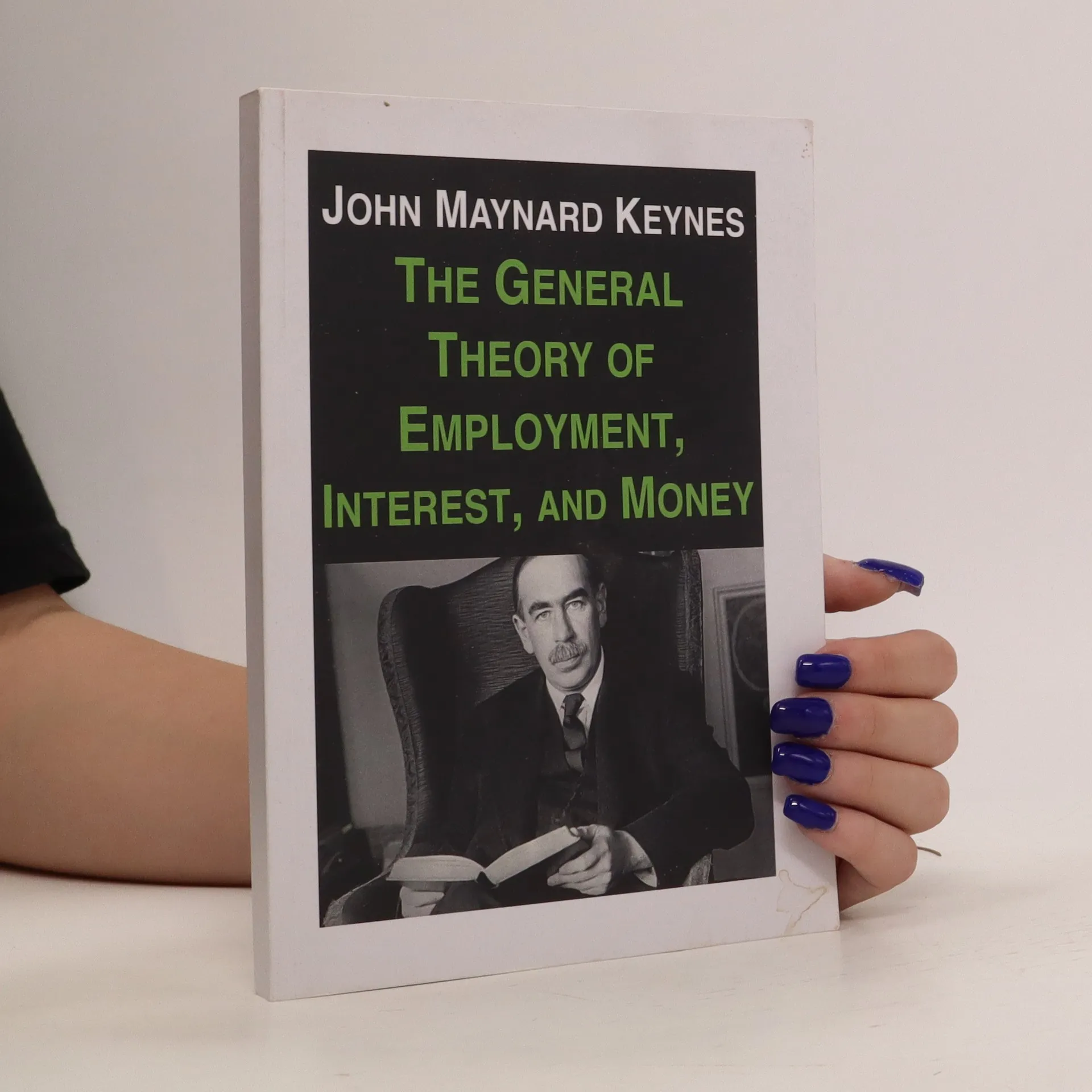
The General Theory of Employment, Interest, and Money, John Maynard Keynes
- Sprache

- Erscheinungsdatum
- 2016
- product-detail.submit-box.info.binding
- (Paperback)
Hier könnte deine Bewertung stehen.
- Sprache
- Englisch
- Autor*innen
- John Maynard Keynes
- Erscheinungsdatum
- 2016
- Einband
- Paperback
- Seitenzahl
- 242
- ISBN10
- 1535221984
- ISBN13
- 9781535221986
- Reihe
- Schlagwörter
- Sachbücher, Sozialwissenschaften, Handel, Wirtschaft & Management, Politikwissenschaft, Politik, Ökonomie, Finanzen, Sozialismus, Zinsen, Zinsberechnung
- Erstveröffentlichung
- 1936
- Originaltitel
- The General Theory of Employment, Interest and Money
- Bewertung
- 3,85 von 5 Sternen
- Beschreibung
- The General Theory of Employment, Interest and Money of 1936 is the last and most important book by the English economist John Maynard Keynes. It created a profound shift in economic thought, giving macroeconomics a central place in economic theory and contributing much of its terminology - the "Keynesian Revolution". It had equally powerful consequences in economic policy, being interpreted as providing theoretical support for government spending in general, and for budgetary deficits, monetary intervention and counter-cyclical policies in particular. It is pervaded with an air of mistrust for the rationality of free-market decision making.Keynes denied that an economy would automatically adapt to provide full employment even in equilibrium, and believed that the volatile and ungovernable psychology of markets would lead to periodic booms and crises. The General Theory is a sustained attack on the 'classical' orthodoxy of its time enlivened by frequent sallies of elegant wit (but weighed down by clumsiness and confusion in its technical passages). It introduced the concepts of the consumption function, the principle of effective demand and liquidity preference, and gave new prominence to the multiplier and the marginal efficiency of capital.