



Parameter
- 423 Seiten
- 15 Lesestunden
Mehr zum Buch
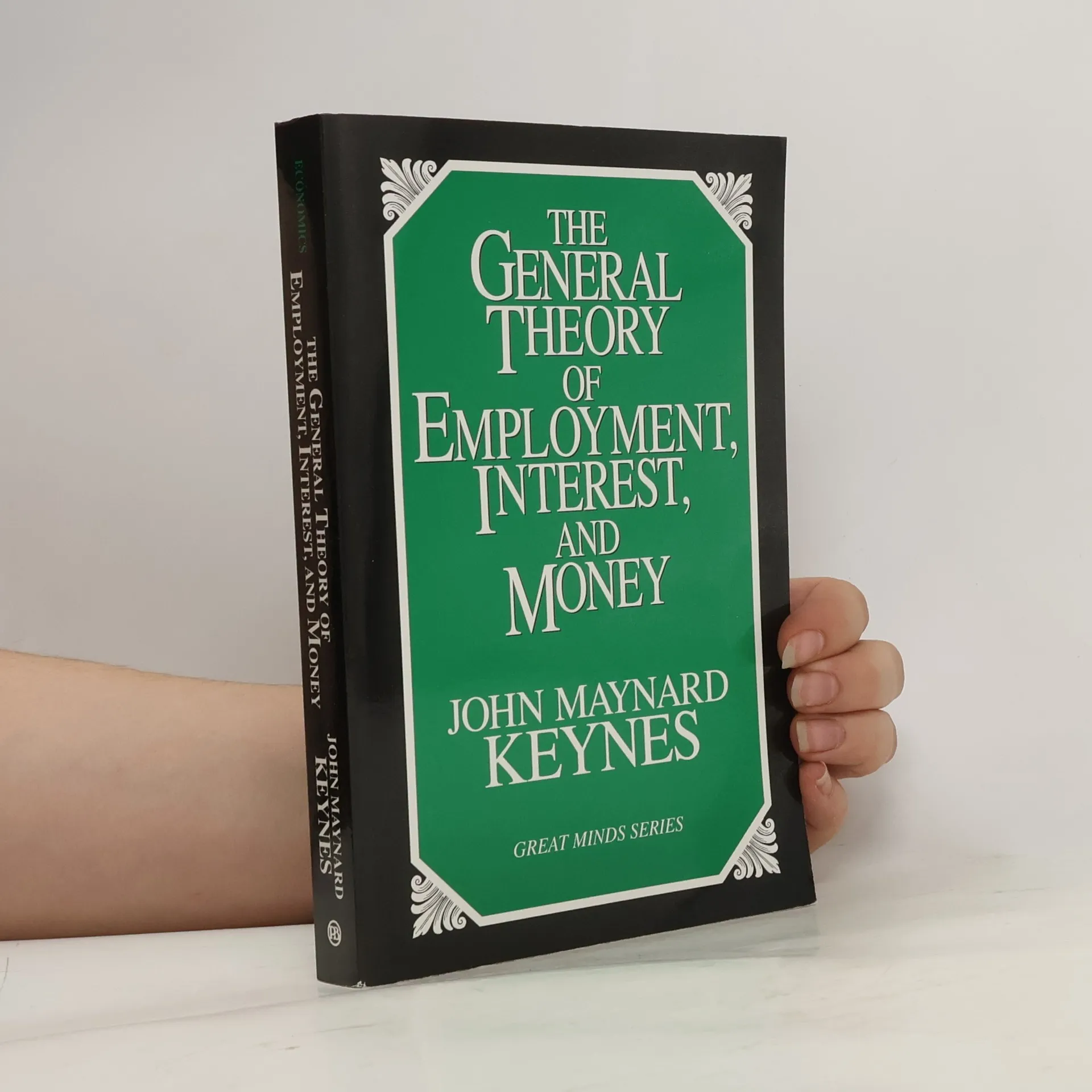
Distinguished British economist John Maynard Keynes (1883-1946) set off a series of movements that drastically altered the ways in which economists view the world. In his most important work, The General Theory of Employment, Interest, and Money (1936), Keynes critiqued the laissez-faire policies of his day, particularly the proposition that a normally functioning market economy would bring full employment. Keynes's forward-looking work transformed economics from merely a descriptive and analytic discipline into one that is policy oriented. For Keynes, enlightened government intervention in a nation's economic life was essential to curbing what he saw as the inherent inequalities and instabilities of unregulated capitalism.






Buchkauf
The general theory of employment, interest, and money, John Maynard Keynes
- Sprache

- Erscheinungsdatum
- 1997
- product-detail.submit-box.info.binding
- (Paperback)
Hier könnte deine Bewertung stehen.
- Sprache
- Englisch
- Autor*innen
- John Maynard Keynes
- Verlag
- Prometheus Books
- Erscheinungsdatum
- 1997
- Einband
- Paperback
- Seitenzahl
- 423
- ISBN10
- 1573921394
- ISBN13
- 9781573921398
- Reihe
- Schlagwörter
- Sachbücher, Sozialwissenschaften, Handel, Wirtschaft & Management, Politikwissenschaft, Politik, Ökonomie, Finanzen, Sozialismus, Zinsen, Zinsberechnung
- Erstveröffentlichung
- 1936
- Originaltitel
- The General Theory of Employment, Interest and Money
- Bewertung
- 3,85 von 5 Sternen
- Beschreibung
- Distinguished British economist John Maynard Keynes (1883-1946) set off a series of movements that drastically altered the ways in which economists view the world. In his most important work, The General Theory of Employment, Interest, and Money (1936), Keynes critiqued the laissez-faire policies of his day, particularly the proposition that a normally functioning market economy would bring full employment. Keynes's forward-looking work transformed economics from merely a descriptive and analytic discipline into one that is policy oriented. For Keynes, enlightened government intervention in a nation's economic life was essential to curbing what he saw as the inherent inequalities and instabilities of unregulated capitalism.