


Parameter
- 235 Seiten
- 9 Lesestunden
Mehr zum Buch
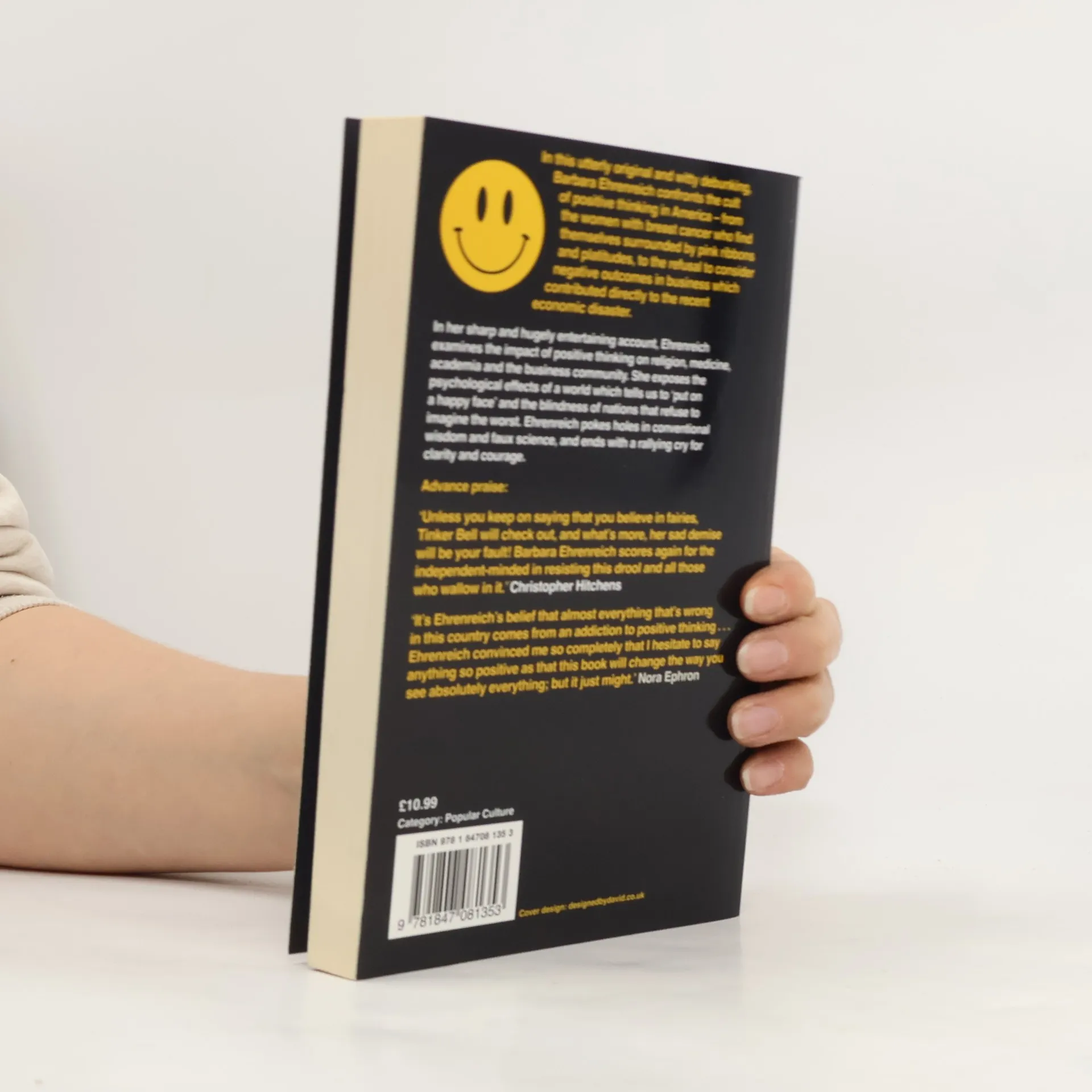
Americans are known for their cheerful and optimistic nature, which is seen as both a reputation and a self-image. This positivity is often portrayed as essential for success and prosperity. Barbara Ehrenreich offers a unique perspective on this cultural mindset, tracing its evolution from a marginal healing technique in the nineteenth century to a dominant societal attitude. Evangelical mega-churches promote the idea that desire alone can lead to prosperity, while the medical field advocates for positive thinking due to its supposed health benefits. Academia has embraced "positive psychology" and the "science of happiness," but nowhere is this bright-siding more entrenched than in the business sector. Ehrenreich argues that the refusal to acknowledge negative outcomes, such as mortgage defaults, has played a significant role in economic crises. She reveals the personal and national consequences of this relentless optimism, including self-blame and an irrational disregard for reality. Through her incisive critique, Ehrenreich challenges conventional wisdom and pseudo-science, ultimately advocating for a more realistic and courageous approach to life.




Buchkauf
Smile or Die, Barbara Ehrenreich, Christopher Hitchens
- Sprache

- Erscheinungsdatum
- 2009
- product-detail.submit-box.info.binding
- (Paperback)
Hier könnte deine Bewertung stehen.
- Titel
- Smile or Die
- Untertitel
- How Positive Thinking Fooled America and the World
- Sprache
- Englisch
- Autor*innen
- Barbara Ehrenreich, Christopher Hitchens
- Verlag
- Granta Books
- Erscheinungsdatum
- 2009
- Einband
- Paperback
- Seitenzahl
- 235
- ISBN10
- 1847081355
- ISBN13
- 9781847081353
- Reihe
- Schlagwörter
- Sachbücher, Sozialwissenschaften, Historisches Thema, Geschichte, Esoterik & Religion, Politikwissenschaft, Psychologische Thematik, Religiöse Themen, Philosophisches Thema, Religion, Philosophie, Politik, Wissenschaft, Soziologie, Amerika, Lügen, Sekten und Kulte, Realismus, Positives Denken, Ideologie, Positive Psychologie
- Originaltitel
- Bright-sided
- Bewertung
- 3,7 von 5 Sternen
- Beschreibung
- Americans are known for their cheerful and optimistic nature, which is seen as both a reputation and a self-image. This positivity is often portrayed as essential for success and prosperity. Barbara Ehrenreich offers a unique perspective on this cultural mindset, tracing its evolution from a marginal healing technique in the nineteenth century to a dominant societal attitude. Evangelical mega-churches promote the idea that desire alone can lead to prosperity, while the medical field advocates for positive thinking due to its supposed health benefits. Academia has embraced "positive psychology" and the "science of happiness," but nowhere is this bright-siding more entrenched than in the business sector. Ehrenreich argues that the refusal to acknowledge negative outcomes, such as mortgage defaults, has played a significant role in economic crises. She reveals the personal and national consequences of this relentless optimism, including self-blame and an irrational disregard for reality. Through her incisive critique, Ehrenreich challenges conventional wisdom and pseudo-science, ultimately advocating for a more realistic and courageous approach to life.