

Mehr zum Buch
Ethan Allen Hawley, the protagonist of Steinbeck’s last novel, works as a clerk in a grocery store that his family once owned. With Ethan no longer a member of Long Island’s aristocratic class, his wife is restless, and his teenage children are hungry for the tantalizing material comforts he cannot provide. Then one day, in a moment of moral crisis, Ethan decides to take a holiday from his own scrupulous standards. Set in Steinbeck’s contemporary 1960 America, the novel explores the tenuous line between private and public honesty that today ranks it alongside his most acclaimed works of penetrating insight into the American condition. This edition features an introduction and notes by Steinbeck scholar Susan Shillinglaw.




Buchkauf
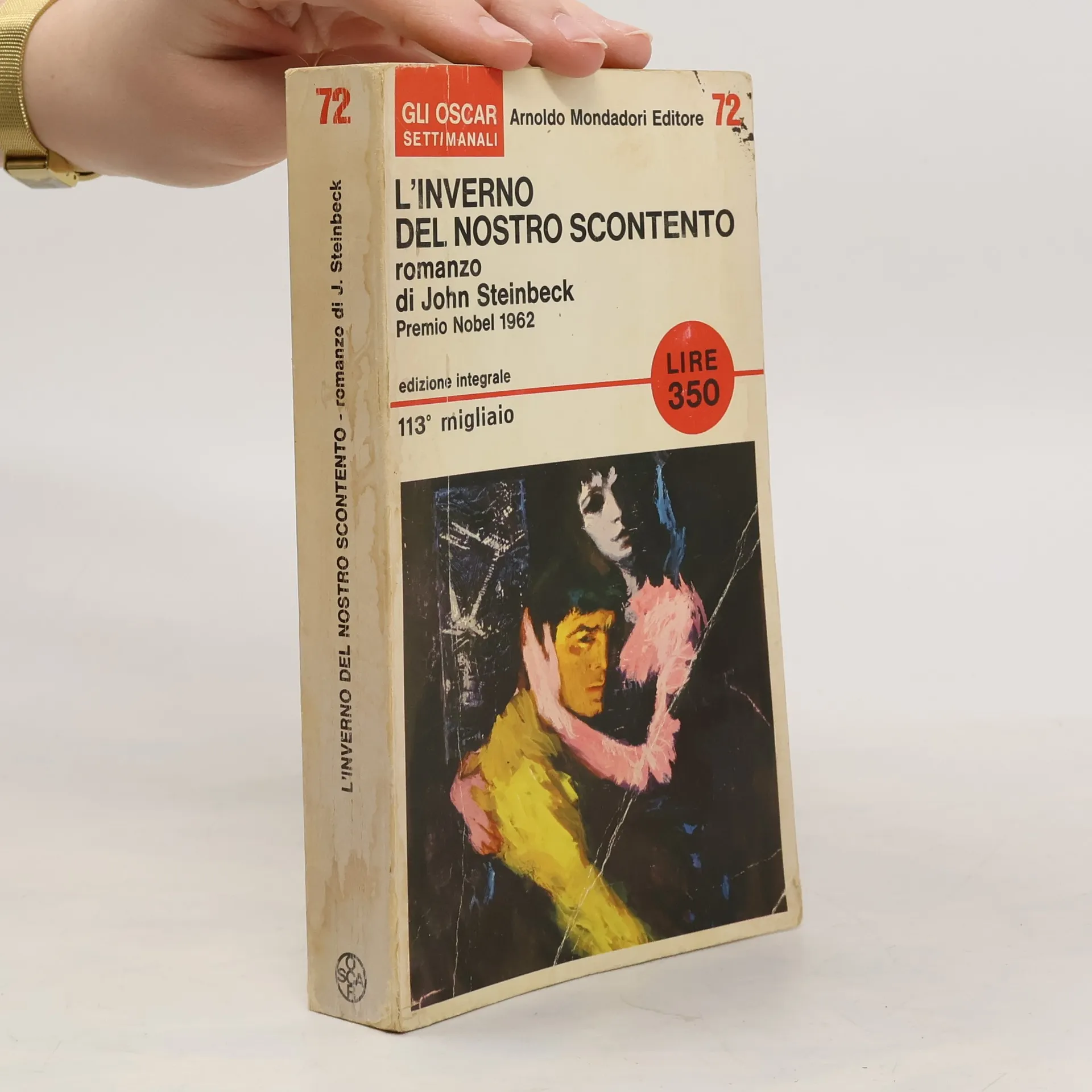
L'inverno del nostro scontento, John Steinbeck
- Sprache

- Erscheinungsdatum
- 1962
- product-detail.submit-box.info.binding
- (Paperback)
Hier könnte deine Bewertung stehen.
- Sprache
- Italienisch
- Autor*innen
- John Steinbeck
- Verlag
- Arnoldo Mondadori
- Erscheinungsdatum
- 1962
- Einband
- Paperback
- Reihe
- Schlagwörter
- Belletristik, Historisches Thema, Klassiker, 20. Jahrhundert, Amerikanische Literatur
- Erstveröffentlichung
- 1961
- Originaltitel
- The Winter of Our Discontent
- Bewertung
- 4 von 5 Sternen
- Beschreibung
- Ethan Allen Hawley, the protagonist of Steinbeck’s last novel, works as a clerk in a grocery store that his family once owned. With Ethan no longer a member of Long Island’s aristocratic class, his wife is restless, and his teenage children are hungry for the tantalizing material comforts he cannot provide. Then one day, in a moment of moral crisis, Ethan decides to take a holiday from his own scrupulous standards. Set in Steinbeck’s contemporary 1960 America, the novel explores the tenuous line between private and public honesty that today ranks it alongside his most acclaimed works of penetrating insight into the American condition. This edition features an introduction and notes by Steinbeck scholar Susan Shillinglaw.