

Parameter
- 144 Seiten
- 6 Lesestunden
Mehr zum Buch
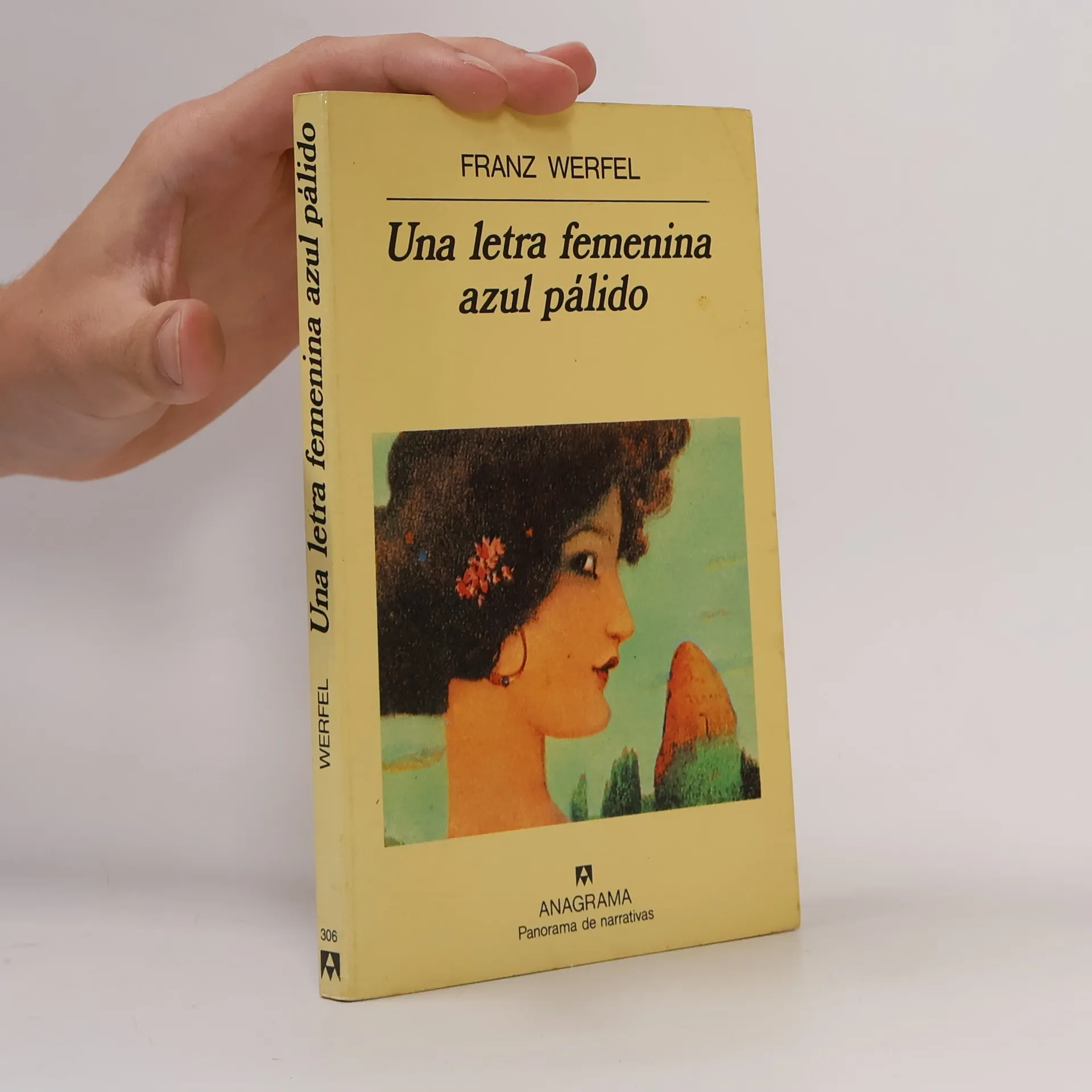
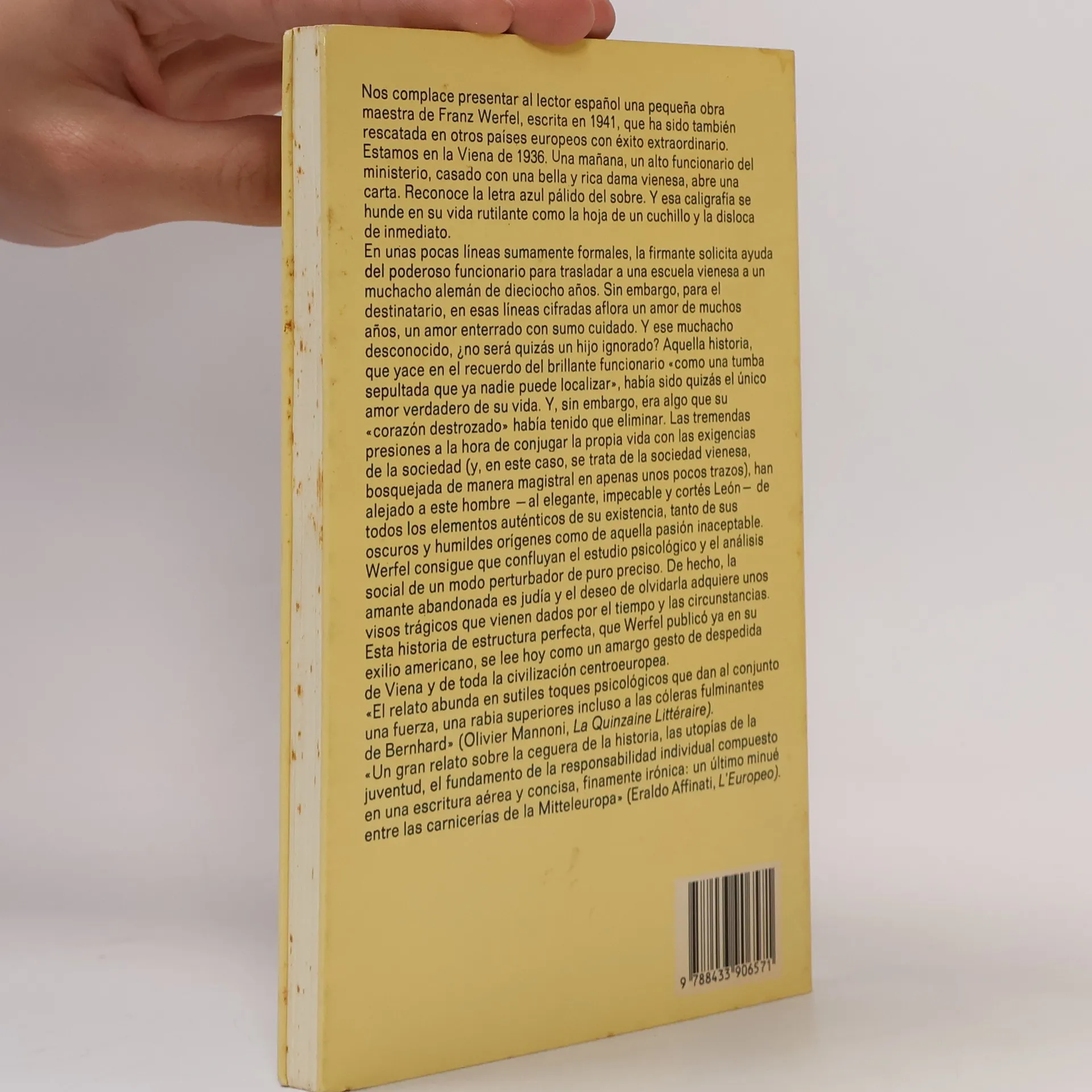
In February 1940, Franz Werfel embarked on a new short novel, a departure from his earlier bestsellers, which would unfold as a tragicomic tale reflecting a world on the brink of becoming inhospitable. This narrative serves as a prelude to Holocaust literature, centering on a suppressed love triangle involving Leonidas Tachezy, a high-ranking Austrian bureaucrat; his younger wife Amelie; and Vera Wormser, a Jewish woman from his past. Leonidas had fallen in love with Vera when she was just fourteen, but after marrying Amelie, he encounters Vera again in a German university town. He promises her marriage but ultimately withdraws from her life, returning to his comfortable existence until a letter arrives, penned in Vera's unmistakable pale blue ink. In a manner reminiscent of Humbert Humbert in Lolita, Leonidas recounts his "crime" against Vera to an imaginary courtroom, revealing the characters' evasions and self-deceptions. The story captures the essence of interwar Austria, highlighting the complexities of anti-Semitism and the diverse Austrian populace. This NEA-award-winning translation makes Werfel's novella accessible to a new generation, affirming his place alongside contemporaries like Mann, Kafka, and Musil in the literary canon.

Buchkauf
Una letra femenina azul pálido, Franz Werfel, Juan José Del Solar Bardelli
- Sprache

- Erscheinungsdatum
- 1994,
- Buchzustand
- Beschädigt
- Preis
- 1,61 €inkl. MwSt.
Hier könnte deine Bewertung stehen.
- Sprache
- Spanisch
- Autor*innen
- Franz Werfel, Juan José Del Solar Bardelli
- Verlag
- Anagrama
- Erscheinungsdatum
- 1994
- Seitenzahl
- 144
- ISBN10
- 8433906577
- ISBN13
- 9788433906571
- Reihe
- Schlagwörter
- Belletristik, Historische Romane, Tschechische Literatur, Liebe, Klassiker, Deutsche Literatur, 20. Jahrhundert, Österreich, Ehe, Novellen, Briefe, Wien, Karriere, Skandale und Affären, Erzählung, Sohn, Zwischenkriegszeit
- Erstveröffentlichung
- 1941
- Originaltitel
- Eine blassblaue Frauenschrift
- Bewertung
- 3,85 von 5 Sternen
- Beschreibung
- In February 1940, Franz Werfel embarked on a new short novel, a departure from his earlier bestsellers, which would unfold as a tragicomic tale reflecting a world on the brink of becoming inhospitable. This narrative serves as a prelude to Holocaust literature, centering on a suppressed love triangle involving Leonidas Tachezy, a high-ranking Austrian bureaucrat; his younger wife Amelie; and Vera Wormser, a Jewish woman from his past. Leonidas had fallen in love with Vera when she was just fourteen, but after marrying Amelie, he encounters Vera again in a German university town. He promises her marriage but ultimately withdraws from her life, returning to his comfortable existence until a letter arrives, penned in Vera's unmistakable pale blue ink. In a manner reminiscent of Humbert Humbert in Lolita, Leonidas recounts his "crime" against Vera to an imaginary courtroom, revealing the characters' evasions and self-deceptions. The story captures the essence of interwar Austria, highlighting the complexities of anti-Semitism and the diverse Austrian populace. This NEA-award-winning translation makes Werfel's novella accessible to a new generation, affirming his place alongside contemporaries like Mann, Kafka, and Musil in the literary canon.