

Parameter
- 224 Seiten
- 8 Lesestunden
Mehr zum Buch
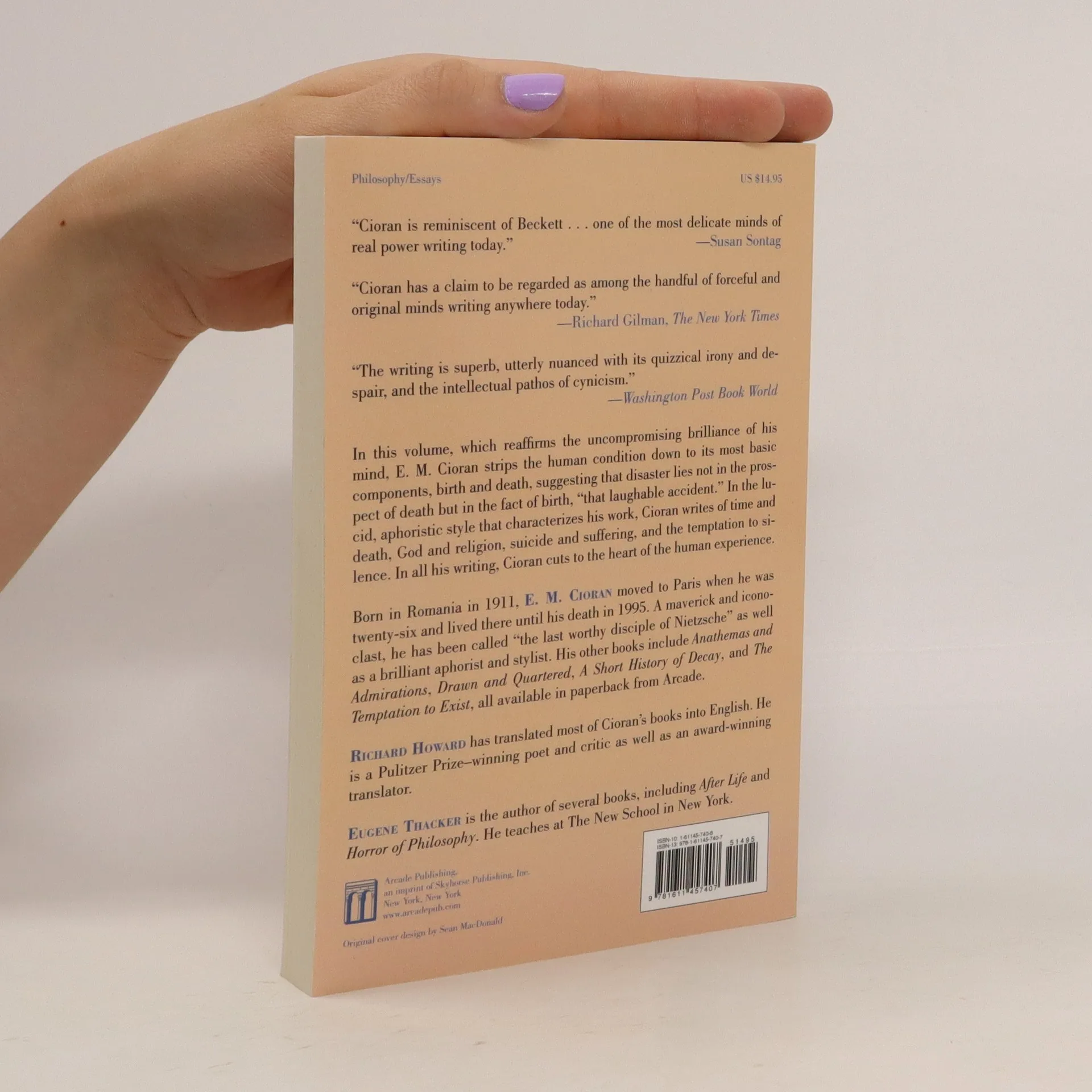
“A love of Cioran creates an urge to press his writing into someone’s hand, and is followed by an equal urge to pull it away as poison.”—The New Yorker In this volume, which reaffirms the uncompromising brilliance of his mind, Cioran strips the human condition down to its most basic components, birth and death, suggesting that disaster lies not in the prospect of death but in the fact of birth, "that laughable accident." In the lucid, aphoristic style that characterizes his work, Cioran writes of time and death, God and religion, suicide and suffering, and the temptation to silence. Through sharp observation and patient contemplation, Cioran cuts to the heart of the human experience. “In the company of Nietzsche and Kierkegaard."—Publishers Weekly "No modern writer twists the knife with Cioran's dexterity. . . . His writing . . . is informed with the bitterness of genuine compassion."—Boston Phoenix





Buchkauf
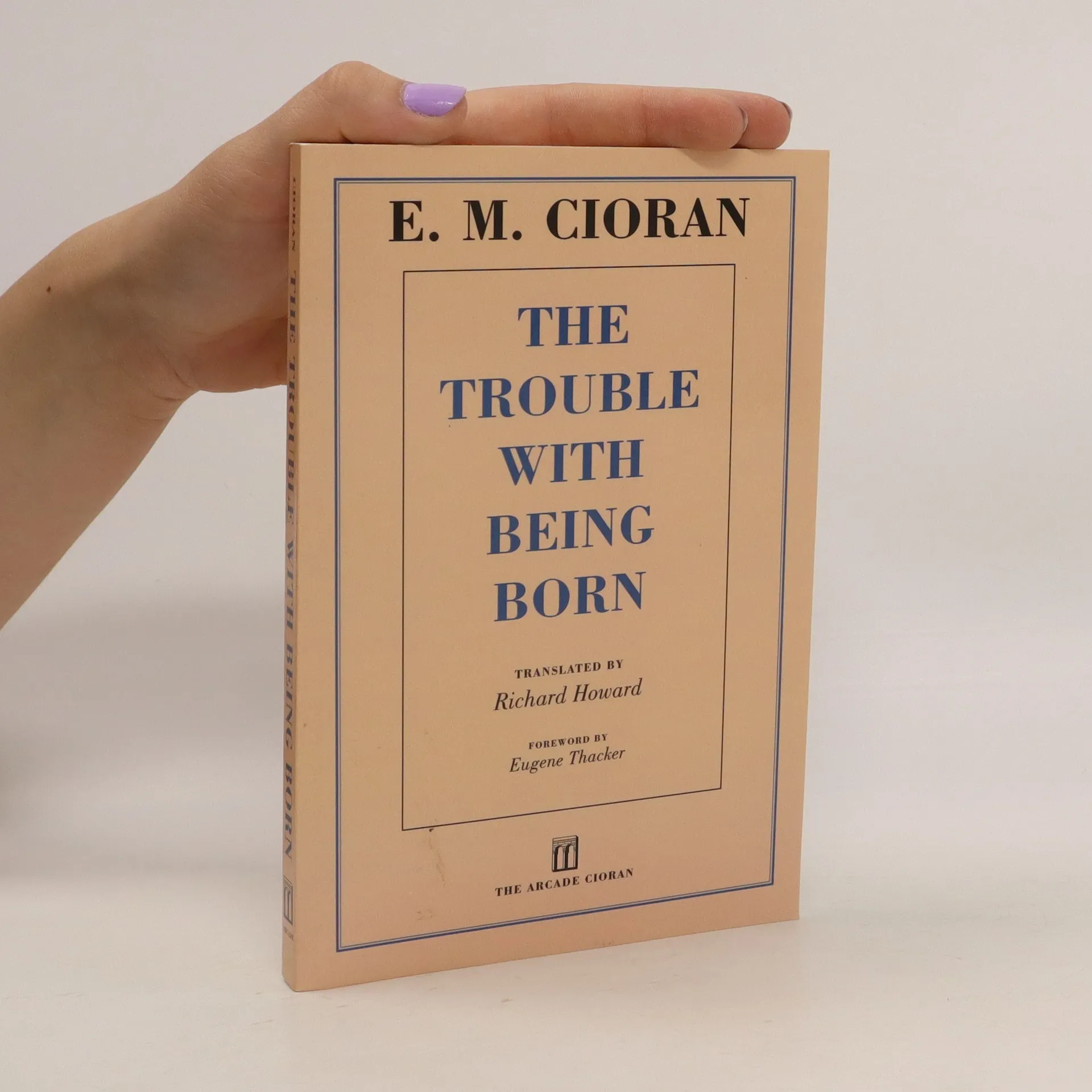
The Trouble with Being Born, Emil Cioran
- Sprache

- Erscheinungsdatum
- 2013
- product-detail.submit-box.info.binding
- (Paperback)
Hier könnte deine Bewertung stehen.
- Sprache
- Englisch
- Autor*innen
- Emil Cioran
- Verlag
- Arcade
- Erscheinungsdatum
- 2013
- Einband
- Paperback
- Seitenzahl
- 224
- ISBN10
- 1611457408
- ISBN13
- 9781611457407
- Reihe
- Schlagwörter
- Sachbücher, Sozialwissenschaften, Wahre Geschichten, Psychologische Thematik, Philosophisches Thema, Frankreich, Meinungsjournalismus, Tod, Französische Literatur, Alleinsein, Selbstmord, Depression, Sinn des Lebens, Aphorismen, Geburt, Rumänien, Denken, Melancholie, Nihilismus
- Erstveröffentlichung
- 1973
- Originaltitel
- De l'inconvénient d'être né
- Bewertung
- 4,05 von 5 Sternen
- Beschreibung
- “A love of Cioran creates an urge to press his writing into someone’s hand, and is followed by an equal urge to pull it away as poison.”—The New Yorker In this volume, which reaffirms the uncompromising brilliance of his mind, Cioran strips the human condition down to its most basic components, birth and death, suggesting that disaster lies not in the prospect of death but in the fact of birth, "that laughable accident." In the lucid, aphoristic style that characterizes his work, Cioran writes of time and death, God and religion, suicide and suffering, and the temptation to silence. Through sharp observation and patient contemplation, Cioran cuts to the heart of the human experience. “In the company of Nietzsche and Kierkegaard."—Publishers Weekly "No modern writer twists the knife with Cioran's dexterity. . . . His writing . . . is informed with the bitterness of genuine compassion."—Boston Phoenix